![Private Label Cosmetics: Ultimate Guide [+Prices]](https://www.spypharma.com/uploads/blog/private-label-cosmetics-ultimate-guide.jpg)
What are Private Label Cosmetics?
Private label cosmetics refers to beauty products that are developed and manufactured by one company but sold under the name of another brand. If they are already pre-produced, it is also referred to as “white label cosmetics”.
More and more brands are opting for private label cosmetics due to their low minimum order quantities and short delivery times.
White Label Cosmetics vs. Private Label Cosmetics
Both types are pre-formulated cosmetic products. The actual difference lies in whether the cosmetic products are already pre-produced or not. If so, you can only put your logo on the products. If not, you can choose and design the packaging as you wish and sometimes even make minor adjustments to the formulation.
Two Types of Private Label Cosmetics and Their MOQ’s
The minimum order quantity (MOQ) for private label cosmetics can vary widely depending on several factors, from the type of product to the level of customization required.
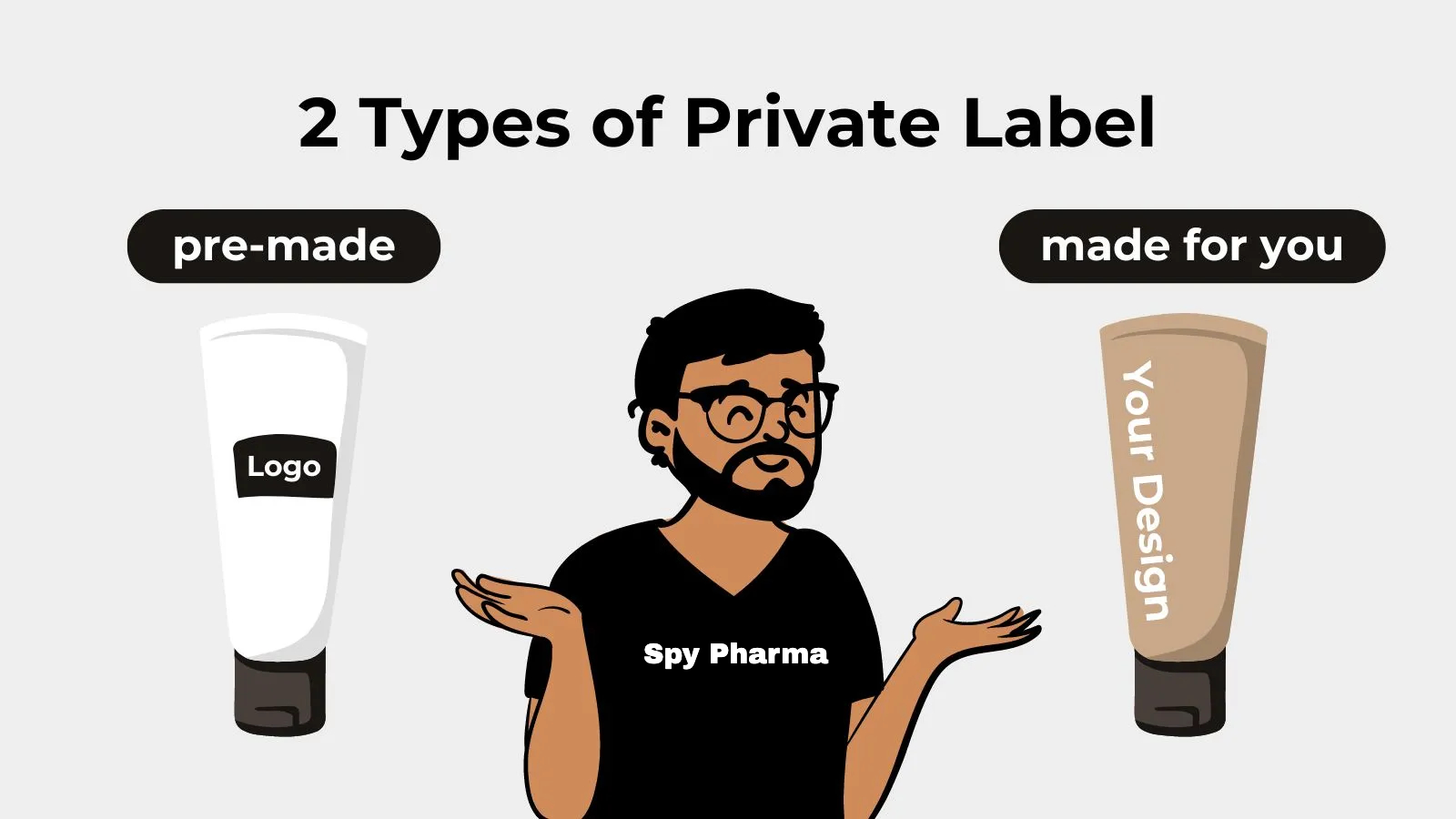
To simplify, we’ve broken it down into two main categories that highlight the primary differences.
1. Pre-made Products (White Label Cosmetics): Starting from 0 Units
For pre-made, on stock, private label cosmetic products, some manufacturers allow businesses to start with just a few pieces or even with no MOQ at all by offering dropshipping. This means they are shipped directly from the manufacturer.
You can brand these ready-to-go products with your logo.
This type of private label cosmetics is also known as white label cosmetics.
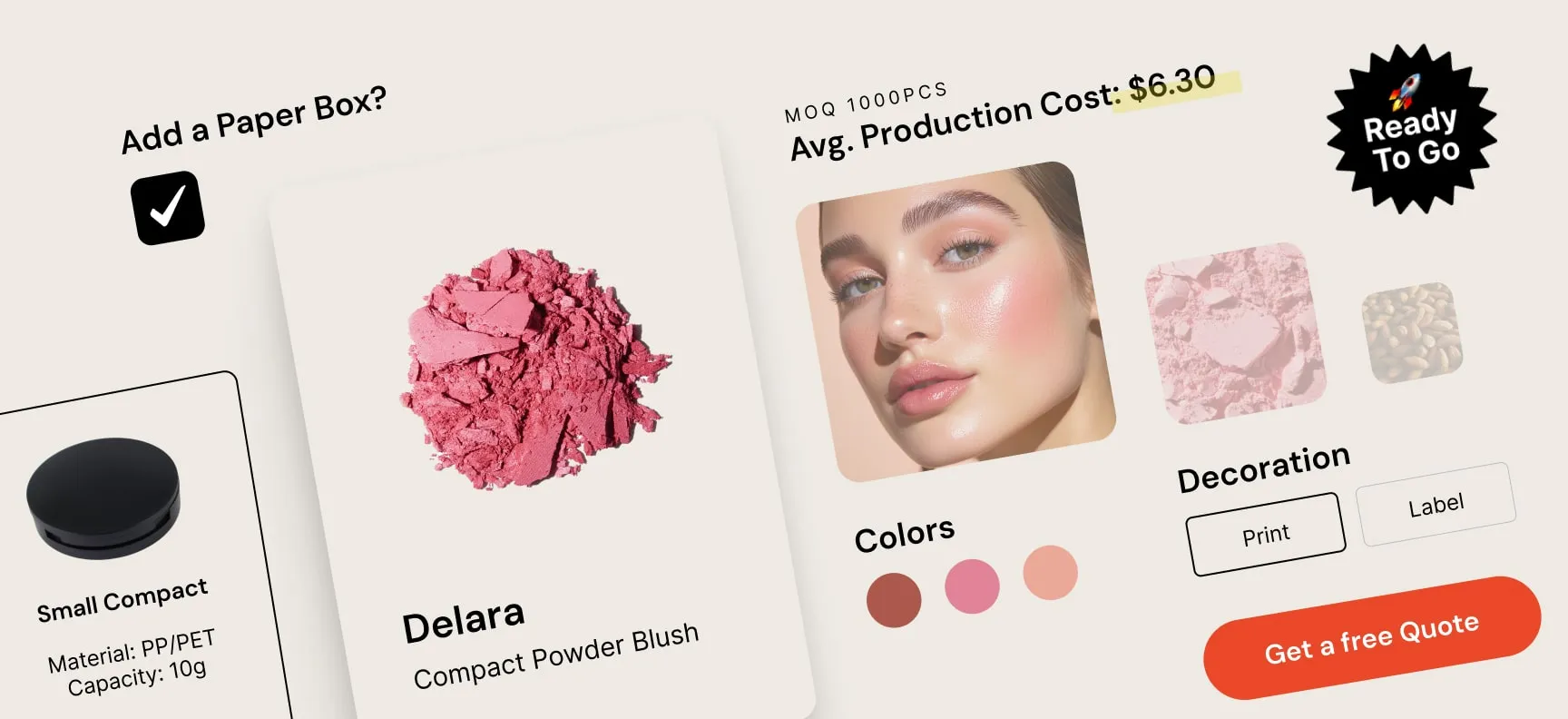
2. Products made for you: Starting from 1000 Units
Some manufacturers take a different approach: they’ve got some formulas developed and packaging selected, but they don’t keep a stock of products ready to ship.
This means you won’t get your goods as quickly as with off-the-shelf products, but the upside is you get to choose the packaging and sometimes even adjust the formula to make it your own.
They usually need to start with at least 1000 pieces per product.
3 Advantages of Private Label Cosmetics
Let’s take a look at the three main advantages of private label cosmetics. Then we’ll discuss the downsides so you can make an informed decision about whether it’s the right choice for you.
1. Quick Market Entry with Private Label Cosmetics
A major advantage of private label cosmetics is the opportunity to enter the complex cosmetics market easily and quickly.
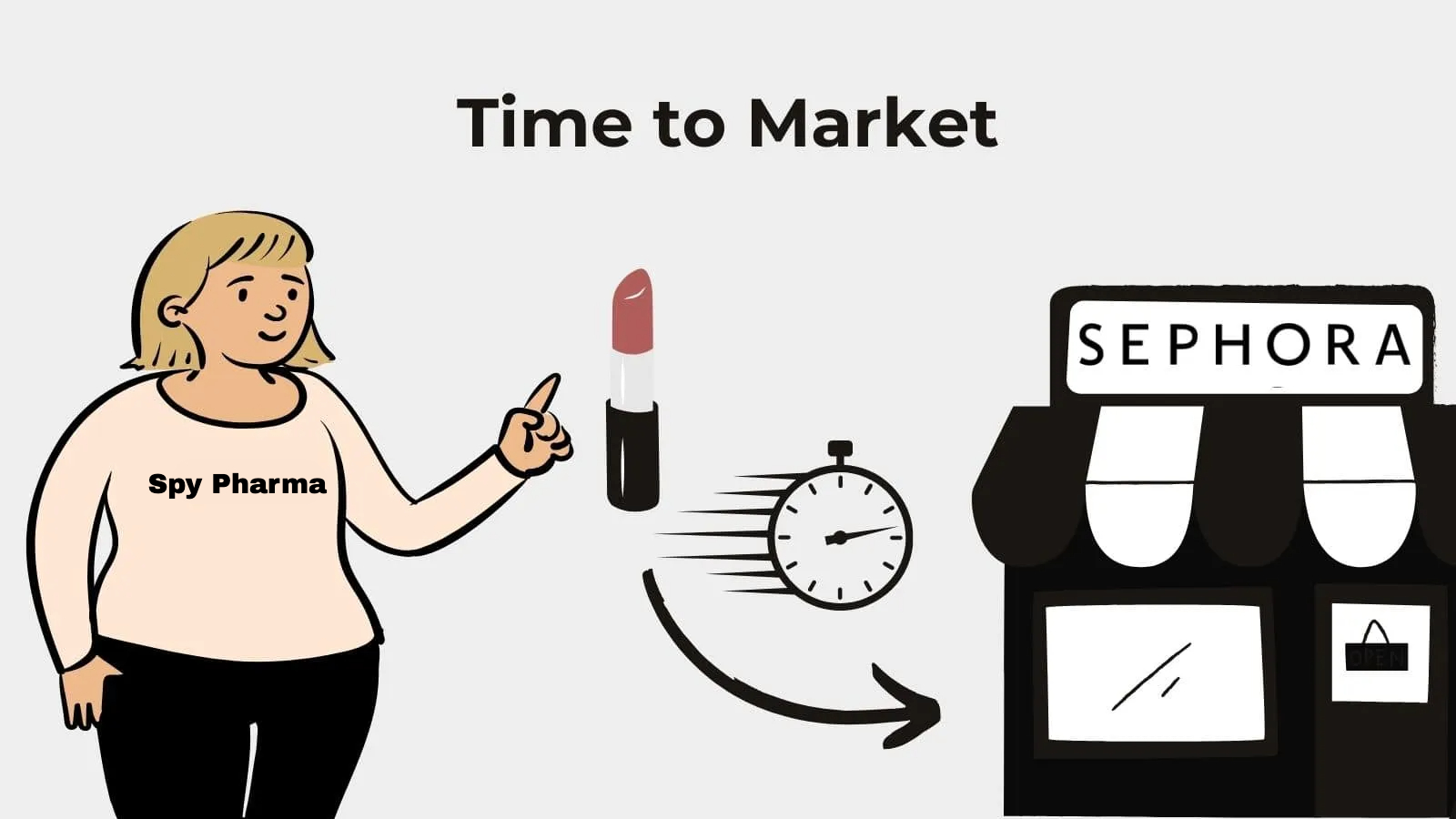
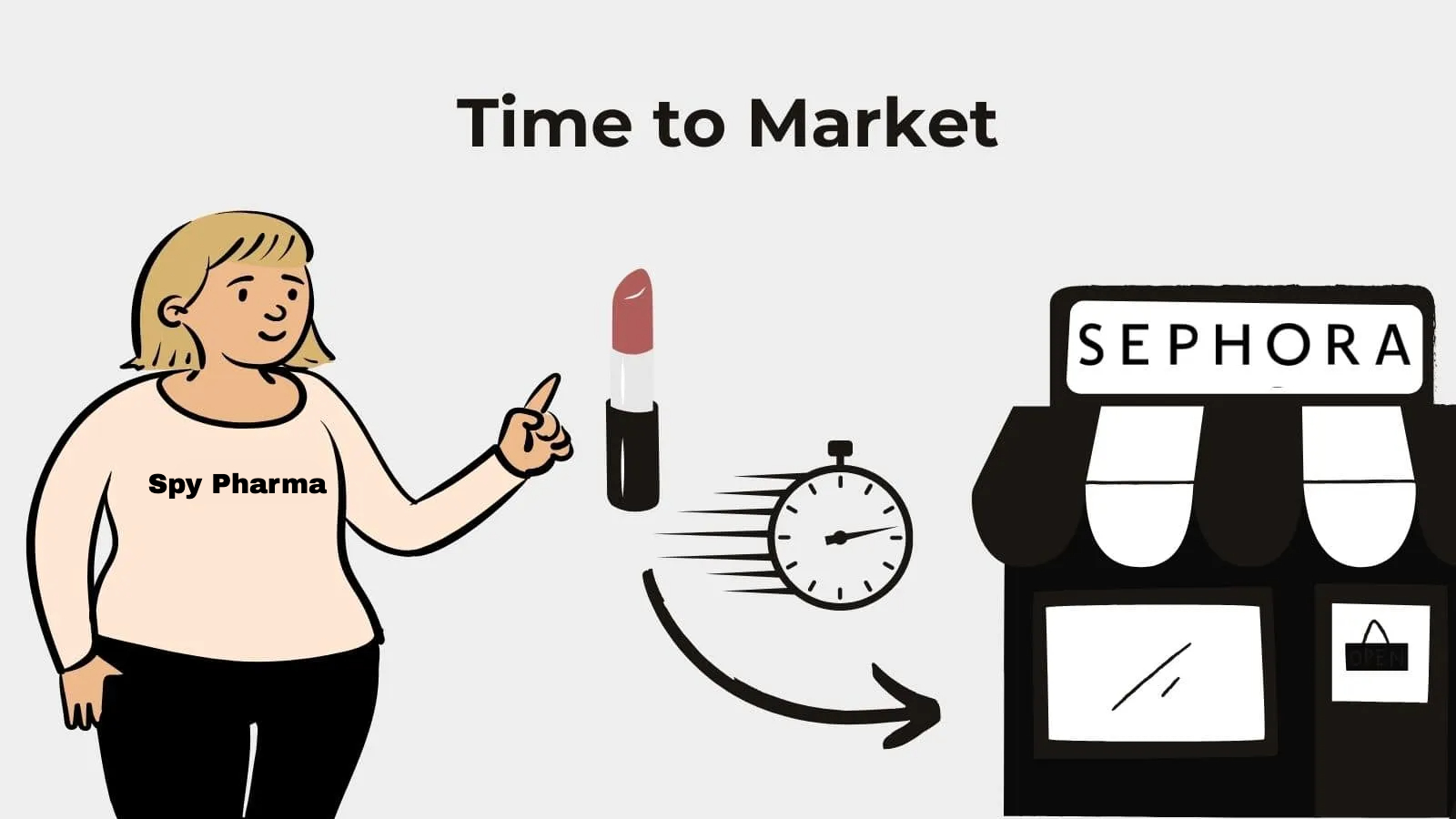
No matter which private label option you choose, the fact that you don’t have to work on an individual formulation saves you about 3–6 months for development.
Either the products are already manufactured and stored on the shelf, or at least ready to be produced. They are immediately available and only need to be customized with your brand.
This can lead to a time to market of 4–12 weeks.
2. Lower Investment thanks to small Minimum Order Quantities
The worst thing that can happen to you as a founder is that you are stuck with the goods.
With private label cosmetics you can start with small minimum order quantities, so you don’t have to invest a lot of money in the production of large quantities at the beginning.
This can be a great advantage for those who want to start a cosmetics line little by little.
3. Customize your Packaging
In an industry that’s all about looks and beauty, you shouldn’t underestimate the power of packaging.
Most of our customers think first and foremost of the actual product, i.e. the bulk. And that’s a good thing because the product ultimately decides whether your customers are satisfied and buy again or not.
However, the packaging and therefore how your product looks and feels plays an even greater role in the initial purchase. Typically, customers cannot test a cosmetic product before the purchase.
The packaging can make a very positive but also a negative impression right away. Your product is perceived as high or low quality within seconds, regardless of what’s inside.
At least with those private label products, that are not pre-manufactured, you can choose and customize the packaging.
3 Disadvantages of Low MOQ Private Label Cosmetics
Now we would like to have a closer look at some of the disadvantages of private label cosmetics with a low MOQ.
1. You have no Control over Formulation
When choosing low MOQ private label cosmetic products, you have no control over the products’ formulation.
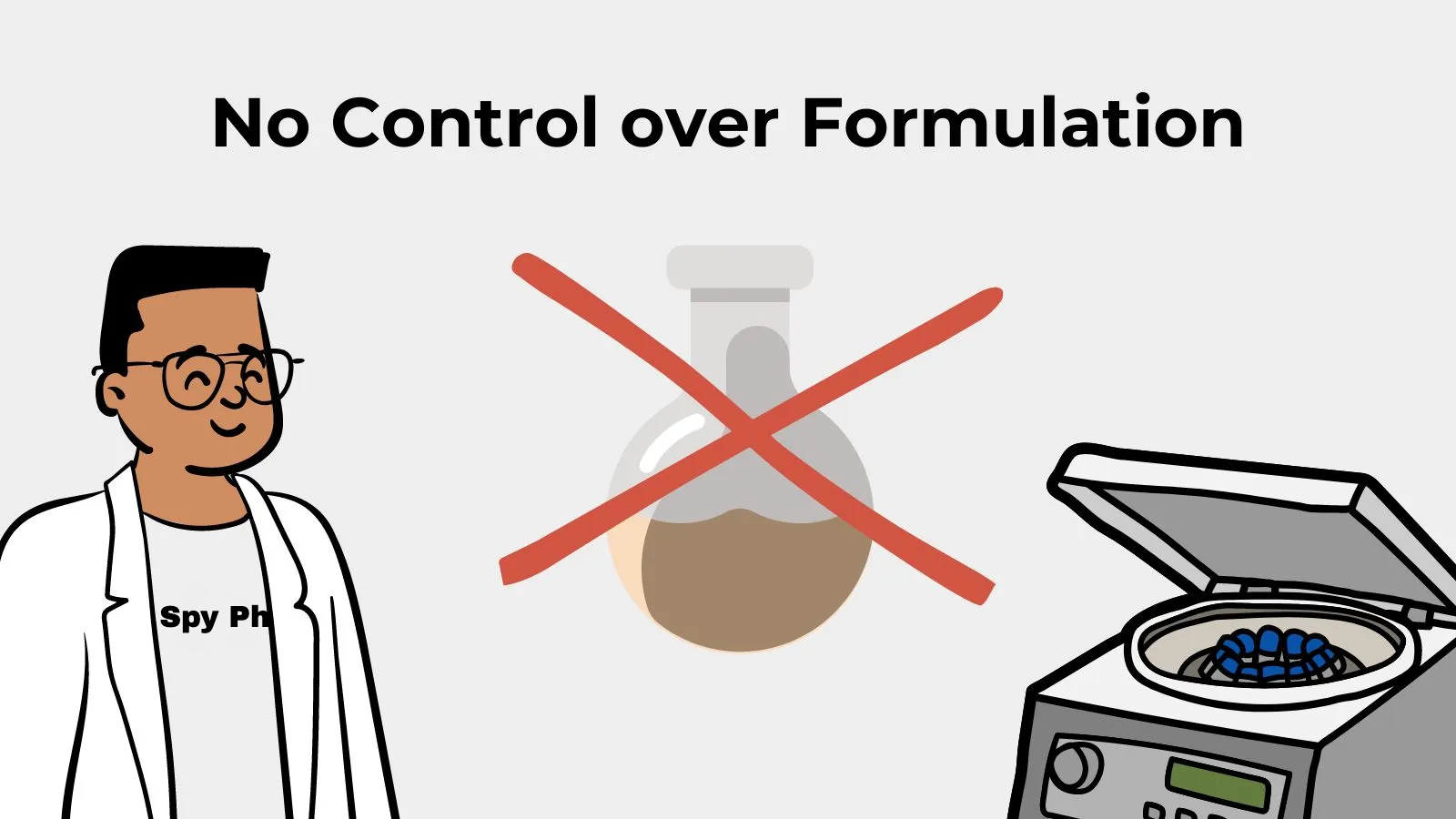
Which means if you don’t like the scent or the texture for example, there’s nothing you can do about it. Combined with the small product selection of many private label suppliers, it can be difficult to find a suitable product.
You really have to like the product and all its features exactly as it is.
2. Lacking Packaging Customization Options
Apart from the fact that you have no influence on the formulation, the packaging of low MOQ private label cosmetics cannot be changed either.
Customization is also very limited. You can only put your logo on the packaging. Sometimes printed, sometimes labelled.
Without unique packaging, it is even more difficult to stand out from other brands on the market.
We have also found that the packaging is most often of moderate quality. This makes it difficult to sell the product for a higher price.
With higher MOQ private label products, you can usually choose the packaging yourself — as long as it is compatible with the formulation. You also have many more decoration options, e.g. colouring the packaging or working with special printing techniques such as 3D or metallization effects.
3. Higher Prices per Unit
While because of the low MOQ your overall investment is lower, the high price per unit is a major drawback.
As a rule of thumb, the lower the order quantity, the higher the price per unit.
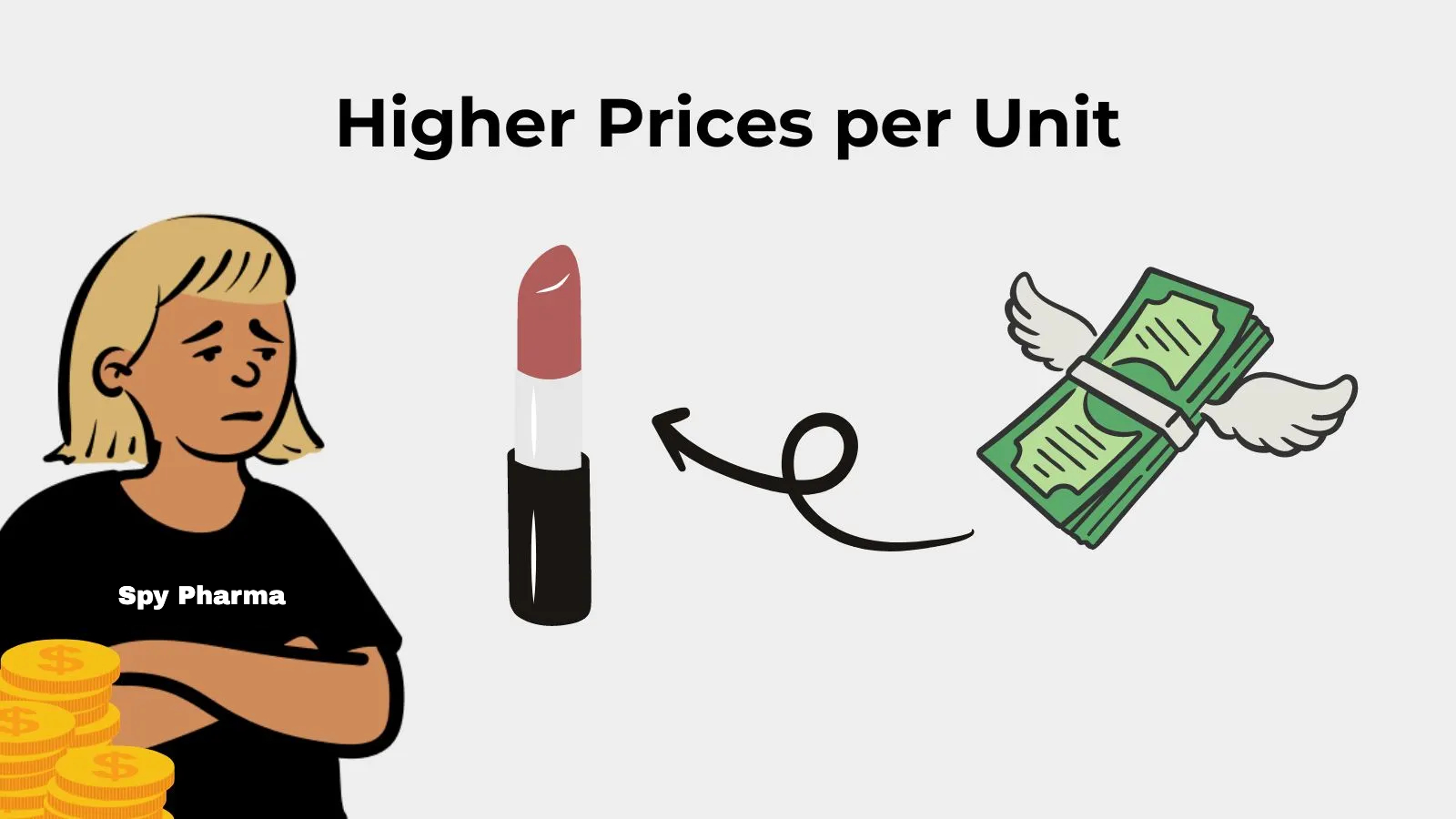
With very small order quantities, it might not be possible to sell the products with a reasonable profit margin after taking all other costs into account.
Especially since the products do not have the quality to sell for a high price.
How Much Does Private Label Cosmetics Costs?
The price depends on many factors, like the formulation, packaging and purchase quantity.
However, you’ll see the biggest jump when you switch from pre-manufactured products to products that are made for you.
Here’s an example of the top 10 best-selling private label cosmetic products and their prices for 0 and 1000 MOQ respectively.
Private Label Cosmetics Prices (Top 10 Products)
| Product | 0 MOQ | 1000 MOQ | |
|---|---|---|---|
| 1 | Lipstick | $7.00 — $10.00 | $2.00 — $3.50 |
| 2 | Nail Polish | $6.00 — $8.00 | $1.50 — $3.00 |
| 3 | Mascara | $8.00 — $10.00 | $2.50 — $4.00 |
| 4 | Moisturizer | $18.00 — $25.00 | $5.50 — $8.00 |
| 5 | Powder | $9.00 — $12.00 | $3.00 — $4.50 |
| 6 | Face Brushes | $10.00 — $12.00 | $1.50 — $3.00 |
| 7 | Eyeliner / Lipliner | $5.00 — $7.50 | $1.50 — $2.50 |
| 8 | Foundation | $10.00 — $12.00 | $4.00 — $5.50 |
| 9 | Lipgloss | $6.00 — $8.00 | $2.00 — $3.50 |
| 10 | Shampoo | $15.00 — $18.00 | $5.00 — $7.00 |
Private Label Cosmetics: Step by Step Guid
If the advantages outweigh the disadvantages for you, and you’d to work with a private label manufacturer, we put together a useful step-by-step guide, that will help you on your journey.
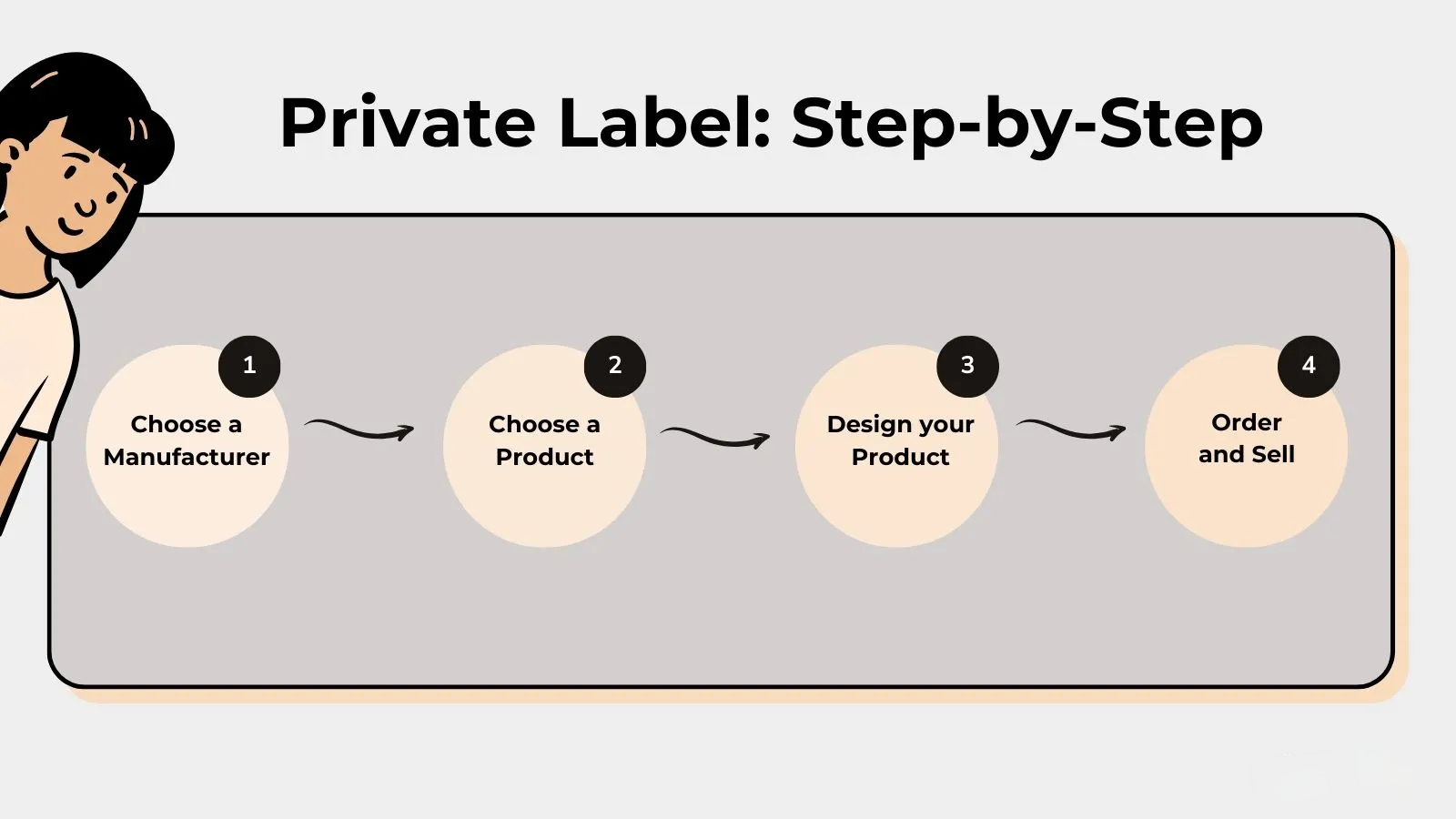
1. Choose the right Private Label Cosmetics Manufacturer
We have written a guide on how to choose the right cosmetics manufacturer and compiled a list of 17 cosmetics manufacturers.
This is not much different from choosing a private label manufacturer, as this is ultimately just a type of cosmetics manufacturer. If you need help with this, please read this article.
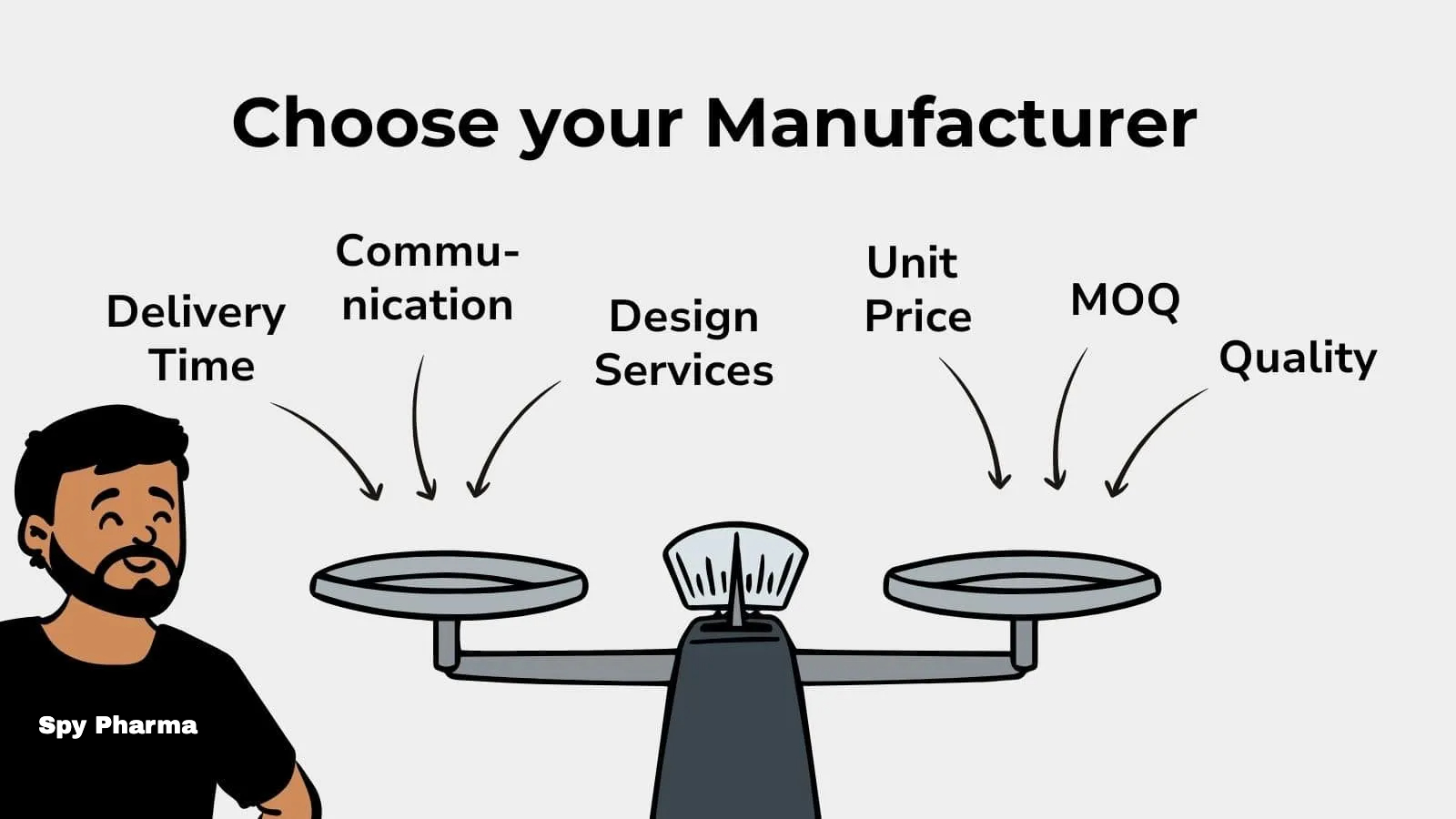
But here is a brief overview of the most important decision factors:
- Quality
- Unit Price
- Lead time (time between the initiation and completion of a production process)
- Delivery time
- Minimum order quantities (MOQ)
- Communication
- Reliability
- Certifications (ISO, GMP, Ecocert etc.)
- Shipping terms (EXW, FOB, door-to-door etc.)
- Additional services like design services
2. Choose your Private Label Cosmetic Products
If you are not quite sure yet which products you’d like to sell, ask the private label manufacturer for advise.
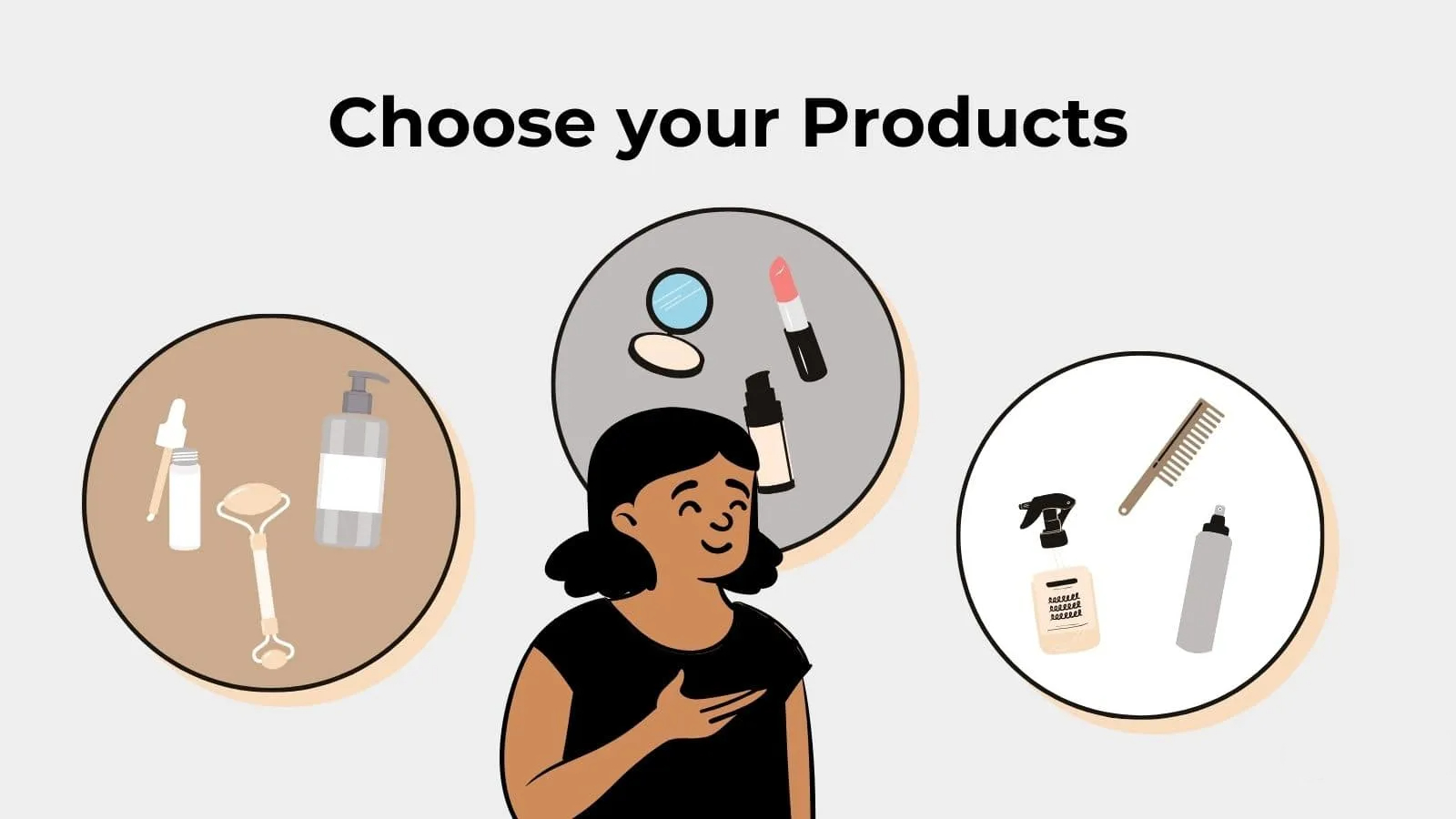
It makes more sense to not just start with one product, such as lipsticks in one color, but to start with a small cosmetic line.
For example, lipsticks, lip liner and lip gloss all in different colors.
Cosmetic products of the same category that can be used together can increase sales and revenue per order significantly.
3. Design your Private Label Cosmetic Products
Depending on the manufacturer and products, you have different customization options when it comes to the design of your cosmetic packaging.
Also, the customization options are based largely on whether the products are already produced and in stock, or they are made for you.
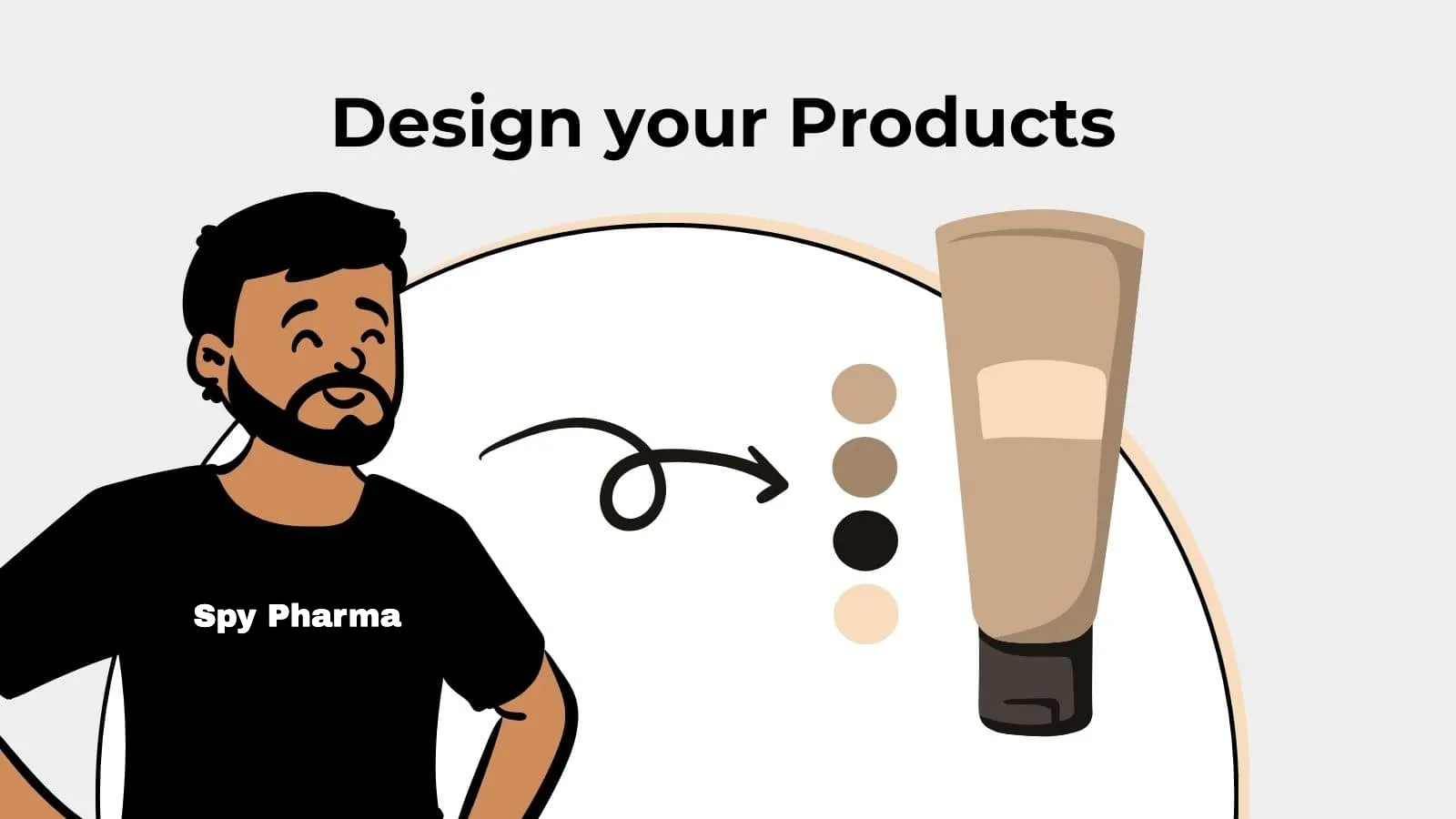
As explained above, the on stock products allow you to add a label with your logo, while the other type can be printed directly. You also have not only the label to customize, but basically the whole packaging as printing area.
4. Order and Sell your Private Label Cosmetic Products
Before you can start selling your products, you should select at least one suitable sales channel. This could be e‑commerce (we recommend using Shopify or WooCommerce), retail or wholesale.
Then you should think about your distribution countries and their cosmetics regulations.
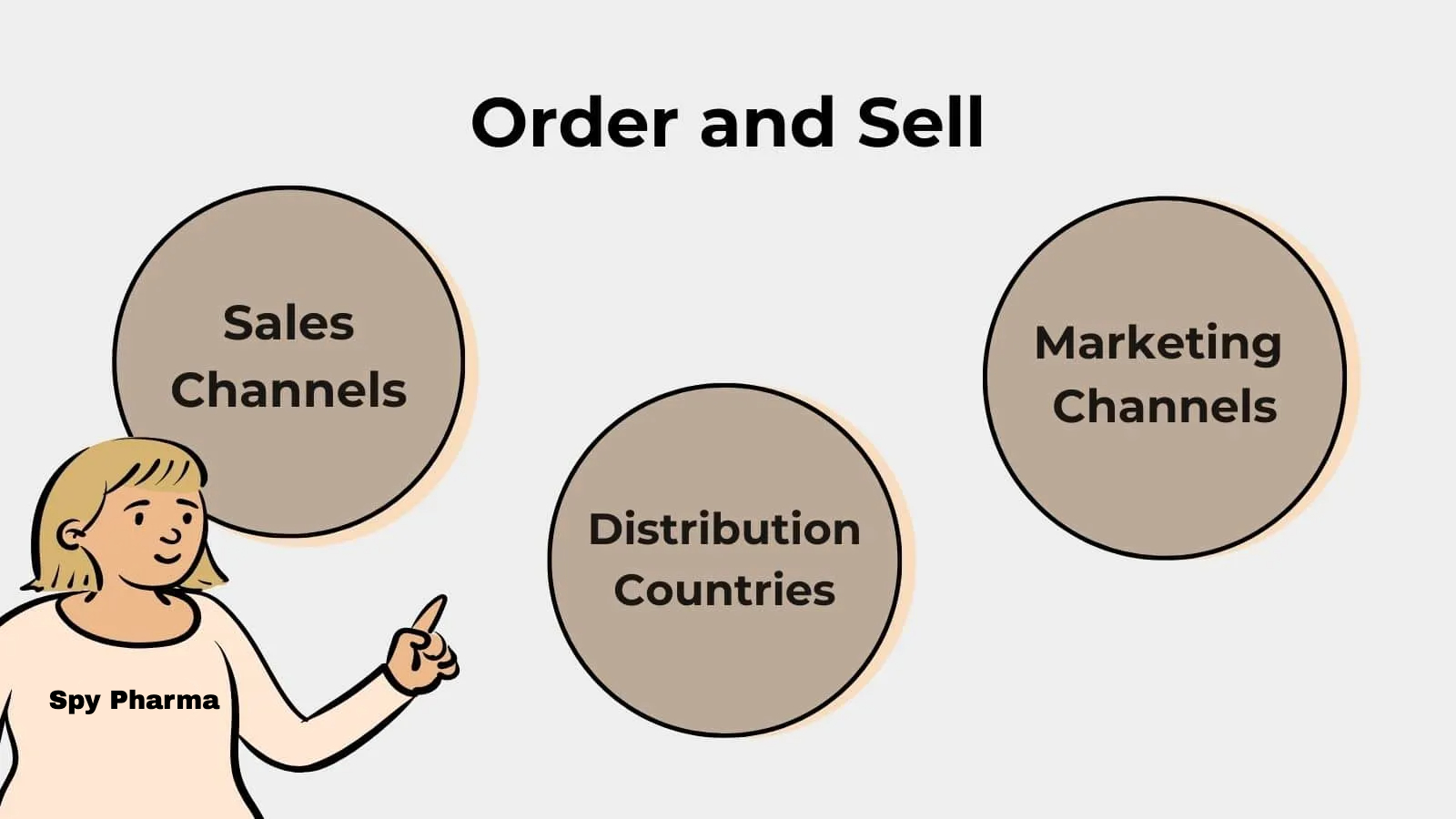
After you decided on your sales channels and distribution countries, you should start to think about marketing channels.
Ready to start your Private Label Cosmetics Brand?
We know that the first steps can be difficult.
But we’re here to help you.
Just let us know which products you’re interested in and we’ll work with you to find a suitable solution.
Because that’s exactly what we do:
You tell us what you want, and we make it happen.
More Useful Guides
![White Label Cosmetics Explained: Pros & Cons in 2025 [+Guide]](https://www.spypharma.com/uploads/blog/white-label-cosmetics-explained.jpg)
White Label Cosmetics Explained: Pros & Cons in 2025 [+Guide]
![Top 17 Cosmetic Manufacturers for Beginners in 2025 [+Guide]](https://www.spypharma.com/uploads/blog/top-17-cosmetics-manufacturers-for-beginnerstop-17-cosmetics-manufacturers-for-beginners.jpg)
Top 17 Cosmetic Manufacturers for Beginners in 2025 [+Guide]
Low MOQ Cosmetic Manufacturers: Be Aware of These Dangers
Ultimate Guide for Vegan Private Label Cosmetics in 2024
![Top 9 Luxury Private Label Cosmetics Manufacturers [+Guide]](https://www.spypharma.com/uploads/blog/luxury-private-label-cosmetics-manufacturers.jpg)
Top 9 Luxury Private Label Cosmetics Manufacturers [+Guide]
![Starting a Lip Gloss Business: A Step-by-Step Guide [2025]](https://www.spypharma.com/uploads/blog/starting-a-lip-gloss-business.jpg)