![How to Start a Makeup Line on a Budget [8 Steps]](https://www.spypharma.com/uploads/blog/how-to-start-a-makeup-line.jpg)
Starting a makeup line as a beginner without a big budget can seem quite overwhelming to impossible. Especially when you first learn about the minimum order quantity (MOQ) of most cosmetics manufacturers.
This easy-to-follow guide will walk you through the 8 most important steps along the way — without any background knowledge and a big budget!
After reading this guide, you’ll know exactly how to start a makeup line on a budget!
How to Start A Makeup Line in 8 Steps
- Choose your Target Market
- Choose your Products
- Set your Target Price
- Choose a Manufacturing Method
- Choose your Sales Channels
- Define your Distribution Countries
- Check Local Regulations
- Choose your Marketing Channels
Step 1
1. Choose your Target Market
Identifying your target market is the foundation. It’s about choosing who your customers are, what they are willing to pay, and what they’re looking for in beauty products.
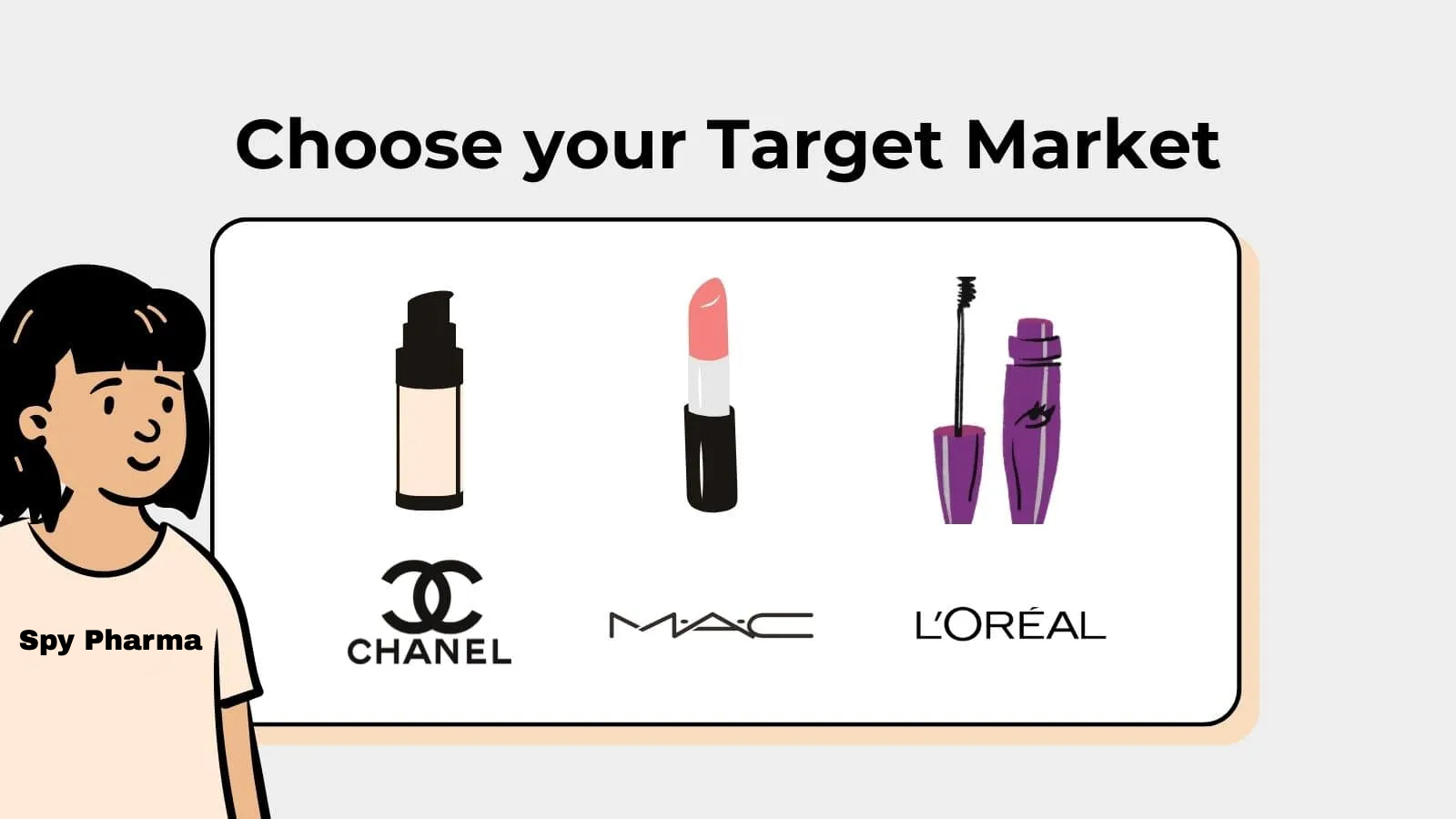
a) Start a Makeup Line in the Mass Market
If you want to target the mass market, you’re looking at providing a wide variety of products at price points accessible to many.
Think of brands like Maybelline or L’Oréal. They offer a broad spectrum of products at budget-friendly prices.
You are in direct competition with multinational corporations. Plus, this broad target group is typically very price-sensitive, which means that they react to even small price increases and switch to competitor products.
Be aware that if you want to target this market, you have to order pretty large purchase quantities from cosmetic suppliers, since the unit price usually drops with increasing order quantity. That is the only way to be truly competitive in this market.
For this reason, the market is out of the question for you if you don’t have a large budget of around $100,000.
b) Start a Makeup Line in the Medium Market
Aiming for the medium market means you’re targeting customers willing to pay a bit more for better quality or unique features.
Brands like Clinique or MAC sell their products in this market.
They provide a balance of quality and price, often with a unique selling proposition (USP). You can identify a USP that sets your products apart and still appeals to a broad audience.
This USP justifies the slightly higher price compared to the mass market. It could be a unique ingredient or just a beautiful brand design.
Depending on whether you want to start your makeup line with individual or prefabricated private label products, the costs and therefore the budget required vary greatly.
Expect a minimum budget of $0 — 10,000$ depeding on the manufacturing method you choose (Step 4).
c) Start a Makeup line in the High-End Market
In the high-end market, exclusivity and superior quality are the name of the game. Brands like Estée Lauder or Chanel reign here. Customers are willing to pay more for these products. But why?
First-class quality is a prerequisite, but this alone is not enough. It comes down to a strong brand identity that justifies the price premium.
People feel connected to brands and are happy to pay a higher price for the feeling of luxury.
This is also why we always recommend our clients to work with a professional brand designer or opt for our brand development service.
If you want to serve this market, establish a strong brand identity that fits with the luxury and exclusivity desired by this market segment. We also have a separate guide on luxury private label cosmetics.
Because you won’t find premium cosmetics that are premade and available from low MOQs, you should plan on a minimum budget of 10,000$.
Step 2
2. Choose your Products
If you know which market you want to serve and who your customers are, the next step is deciding, on the makeup products you want to sell.
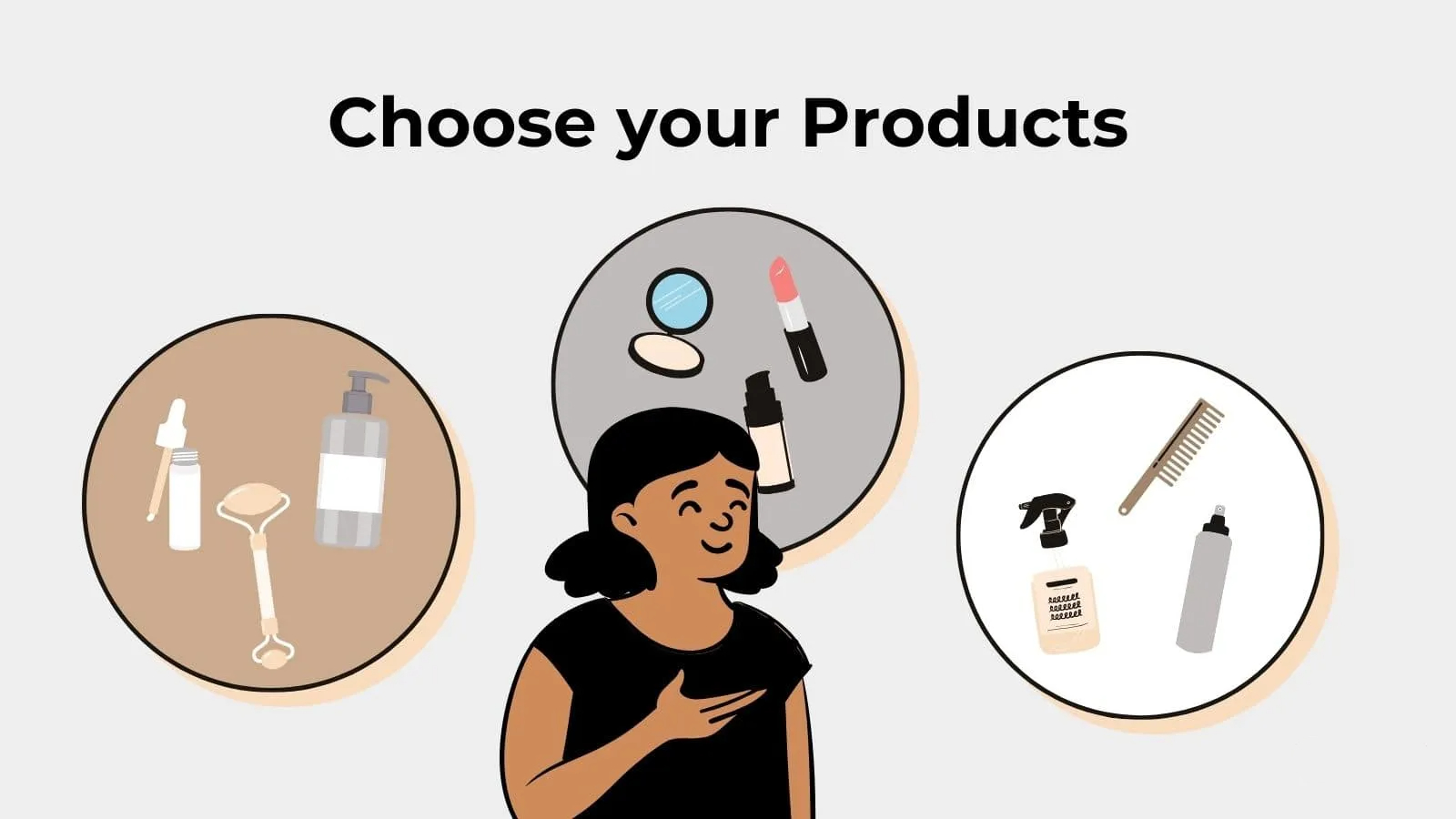
Here’s how you can go about choosing your products.
Set Your Budget to Start a Makeup Line
Before beginning any planning for manufacturing cosmetics, it’s important to determine the amount of money you can realistically invest in your first production.
Your budget determines if you can start with multiple products right away, or you have to start with a single product and gradually expand your makeup line by reinvesting the sales you make.
Starting with several products has the advantage that your average cart value will be higher, so you can scale faster.
But be careful: With greater opportunity comes greater risk!
Find a Niche in the Beauty Market
Finding a niche is about identifying a specific area where your makeup line can stand out.
The beauty market is crowded.
There are so many makeup brands and products lined up next to each other on the shelf that you can barely decide which one to get.
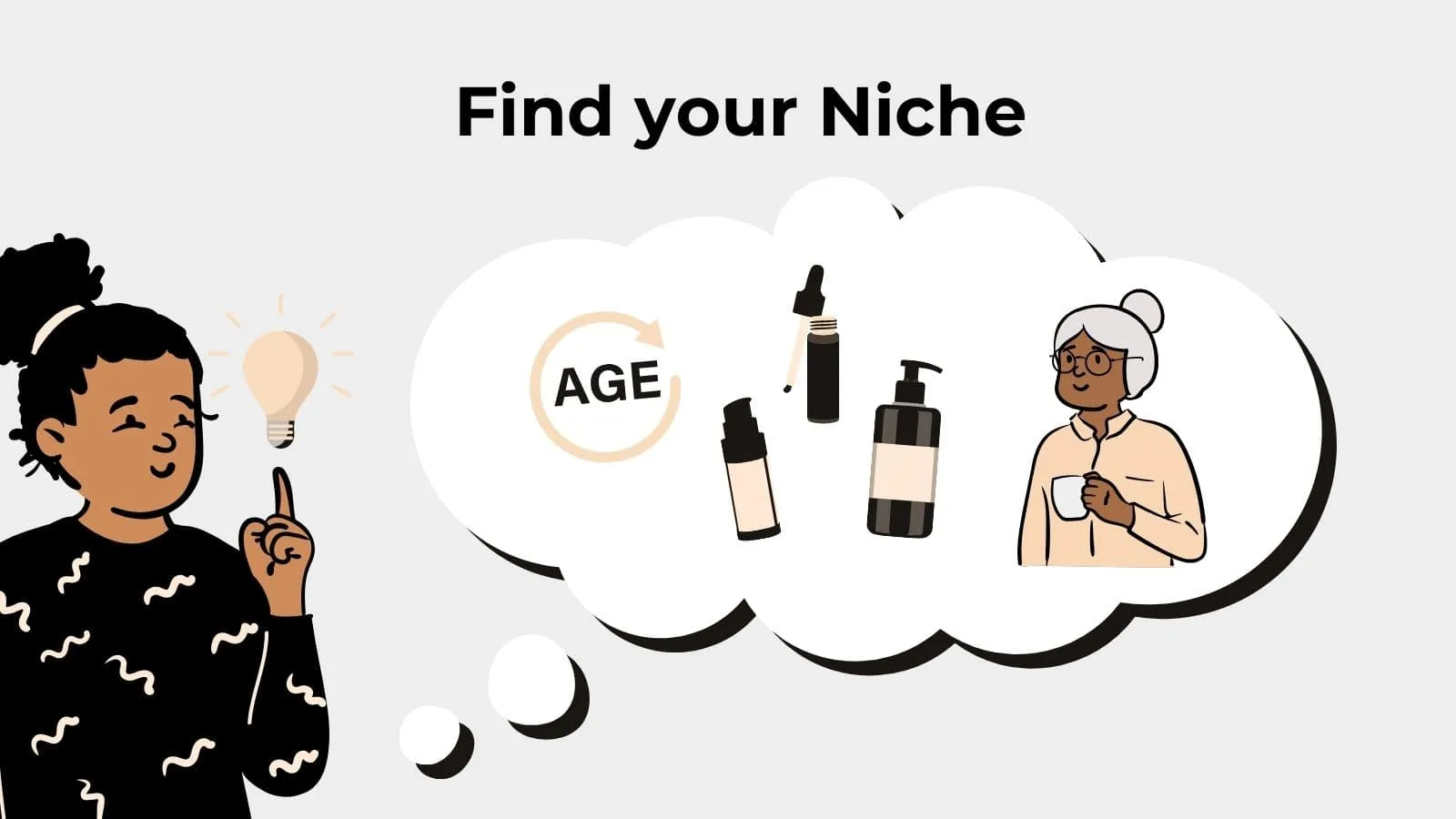
It’s about to find out what is missing on the market. Look for underserved areas or unique product offerings.
Maybe it is not just another face cream, but it is a brand that specializes in aging skin for dark skin types.
Find out what you’re passionate about, what you can do well, and what your target market wants.
Choose the Products to Start Your Makeup Line with
Now, onto the exciting part — choosing the products for your makeup line. Your product range should match with your brand and appeal to your target market.
Try to establish a makeup line where the products complement each other well.
For example, it would not make sense to release a lipstick and then a mascara. A makeup line should be consistent and focus initially on one subcategory of makeup, such as lips, nails, skin, or eyes.
It’s best to contact a cosmetics manufacturer like us, share your budget with them, and let them know which products you would like to produce.
The manufacturer should be able to tell you which products are feasible to start with within your budget. We also offer advice on which products would work best together.
Step 3
3. Set Your Target Price
Your target price is the maximum price you are willing to pay for the production of one unit of your product.
When setting a target price, it should provide enough room for your markup to cover your costs, ensure profitability, and still be affordable for your target audience.
Therefore, target prices are determined by calculating backwards.
Ask yourself how much you can sell a product for and how much profit margin you need/want to have. This then results in your target price.
But let’s take a look at this in more detail.
To make it easier for you to understand, here’s an example.
Imagine you start a makeup line of organic lipsticks and opting for the medium market.
Do a Market Research Before You Start a Makeup Line
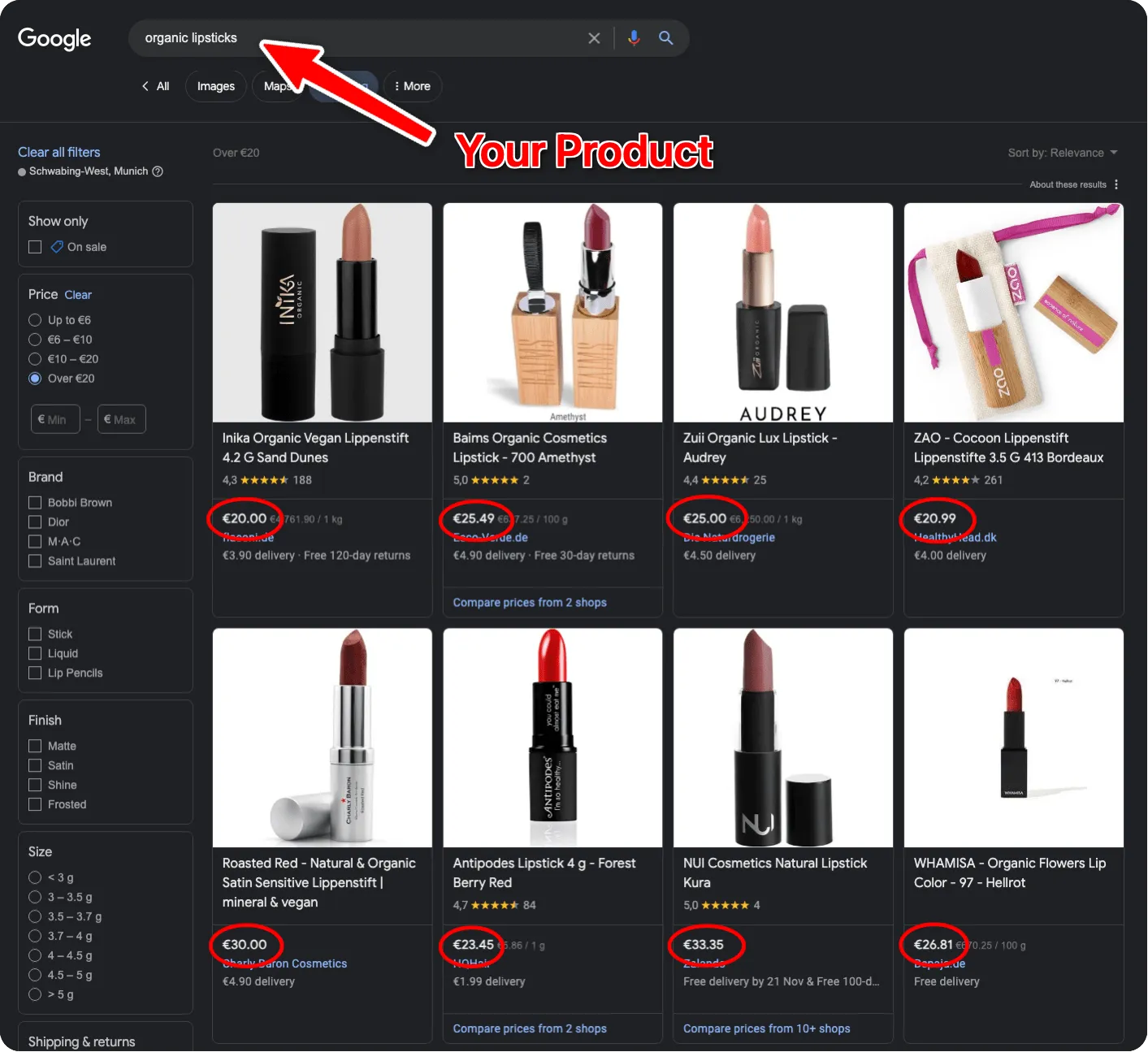
Look at what prices your competitors are charging for similar products within the same target market (in our example: organic lipsticks in the medium market).
You should also look at the quality and features of your competitors lipsticks and compare them with yours. If your lipstick is of a higher quality or has unique features, you might be able to price it higher.
Just search for your product in Google Shopping to get a quick overview of the average price.
As you can see, in our example, the average price is around 25€ for organic lipsticks in the medium market.
Use This Simple Formula to Calculate Your Target Price
Of course, you want to make a profit on top of your costs. That’s why you now define the gross profit margin you are aiming for.
The gross profit margin represents the percentage of revenue that exceeds the cost of goods sold (COGS). Let’s say you aim for a 60% gross profit margin.
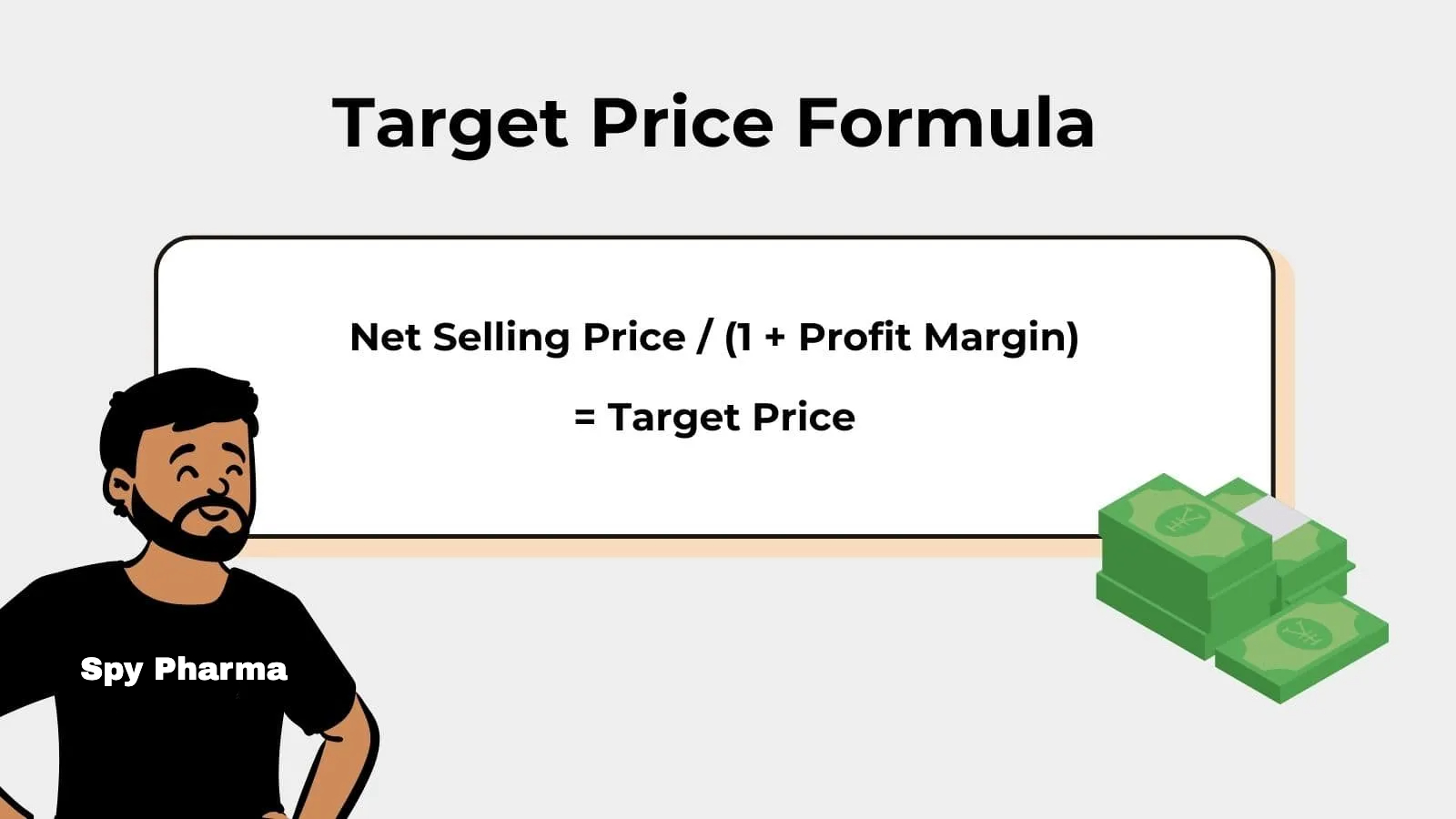
Since you now know your approximate selling price (via a Google Shopping research) and you identified your desired profit margin, you can calculate the target price by using the following formula:
Target Price = Net Selling Price / (1 + Profit Margin)
In our example, if the selling price is $25 ($21 net) and we want a 60% profit margin: Now, plug the values into the formula:
Target Price = Net Selling Price x (1 – Profit Margin)
Target Price = $21 x (1 – 0.60)
Target Price = $21 x 0.40
Target Price = approximately $8.40
So, your target price, which is your cost to manufacture one lipstick, should be 8.40$ to achieve a 60% profit margin on a $21 net selling price.
Include Overhead Costs in your Calculations
When setting your manufacturing target price and desired profit margin, remember to include overheads like office costs, marketing, packaging, and shipping, so you can make the profit you’re aiming for after covering all these extra expenses.
Other beauty brands might have higher profit margins, but starting with a smaller one, can help you enter the market more easily. After you successfully entered the market and established your brand, you can still increase your profit margin by ordering larger quantities and streamlining operations.
Step 4
4. Choose a Manufacturing Method
In the bauty industry, there are three common ways to produce products: White Label, Private Label and Custom Formulation. Each has its Pros and Cons.
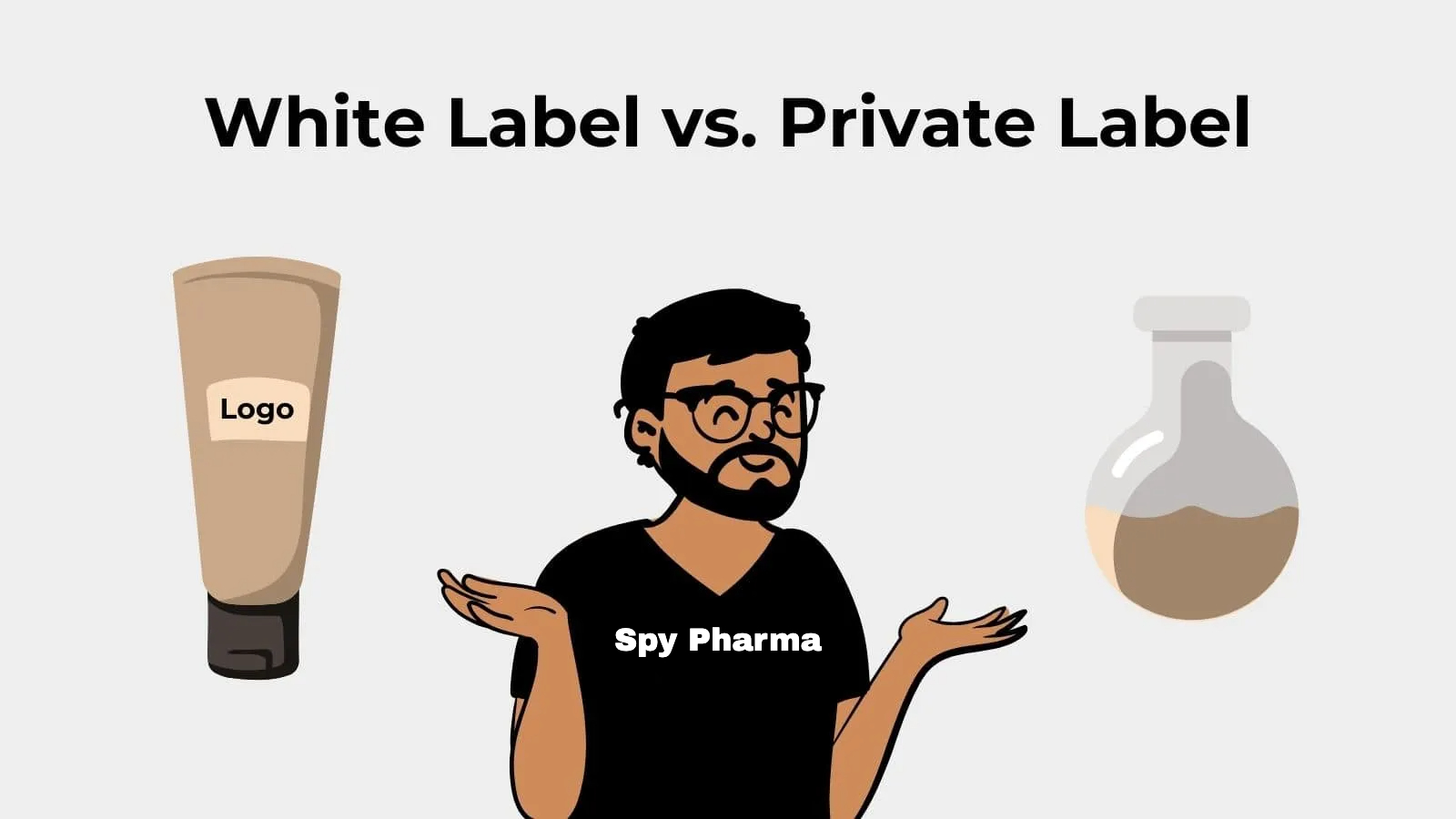
Let’s take a closer look to find out which suits your brand the best.
a) White Label Cosmetics: Zero Budget
White Labeling is about purchasing pre-made products, then branding them as your own. It’s quick, it’s straightforward.
Suppose you choose white label manufacturing for your lipstick line. You’d select pre-made lipsticks from a white label supplier, then brand them with your logo.
White labeling requires less financial investments. Because they are already pre-fabricated, MOQ often start at just one unit per product.
On the downside, you don’t have any options to customize your products besides putting your logo on them. With this option, it is very questionable whether you can survive in the market against other brands that offer higher quality products at a lower price.
This is by far the cheapest option for starting a make-up line. You can basically start with zero budget by dropshipping white label products.
b) Private Label Cosmetics: >5.000$
Private label cosmetics allows you to take proven products or formulas and customize them to better suit your ideas.
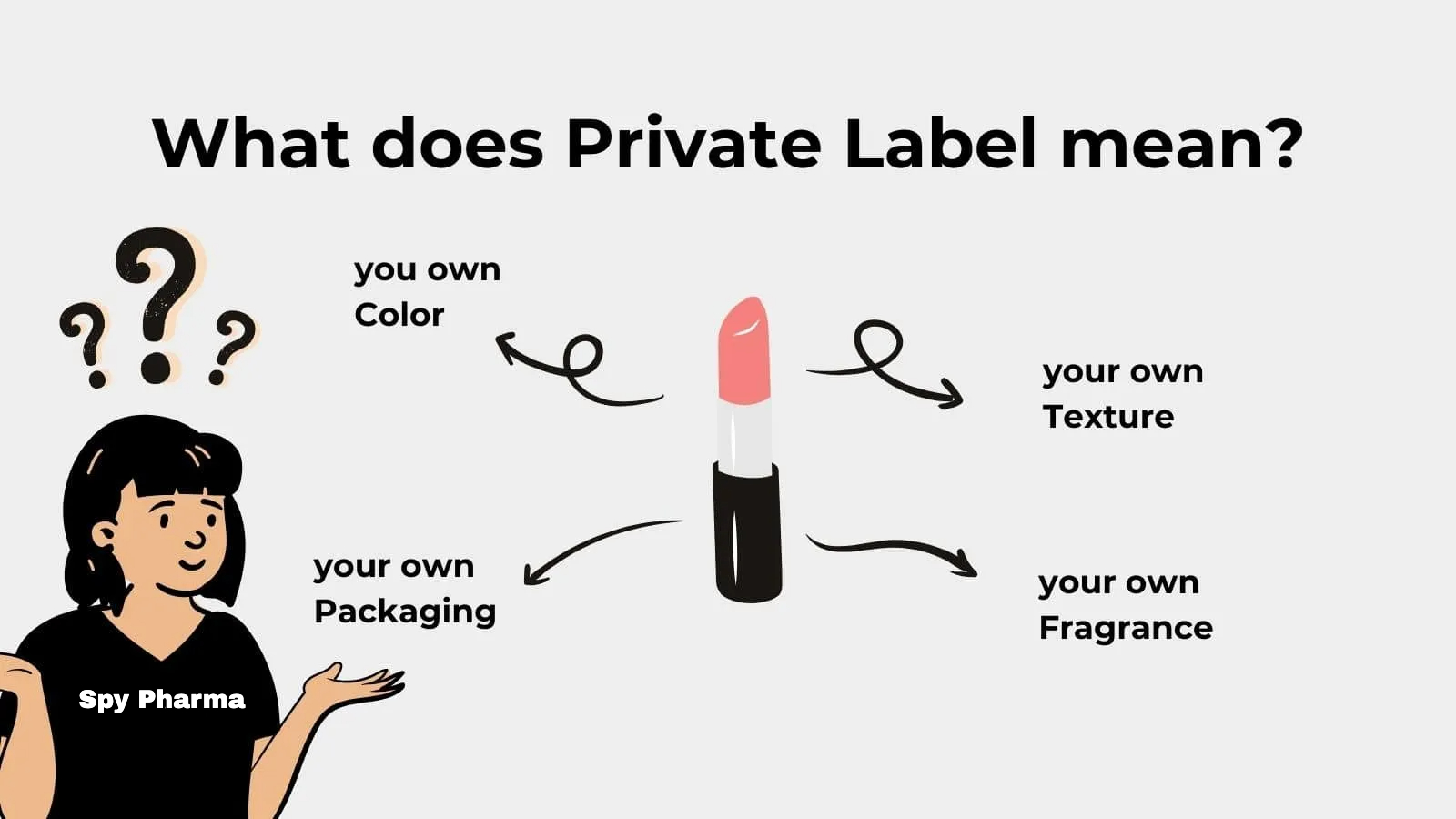
You can tailor the products to meet the specific demands and preferences of your target market. This includes changing the color, fragrance or even the texture to some degree to match your brand.
But what’s probably the most significant difference to white label products, is the ability to choose and customize the packaging.
It’s a great option to get started in the medium or even luxury market at low cost. You will absolutely be able to keep up with brands like MAC in terms of the price/performance ratio of your products.
The downside is that you have to purchase a certain minimum quantity, as the products are not pre-produced. MOQs usually start at 1000 — 3000 pieces.
c) Custom Formulation: >10.000$
Custom Formulation is the best option when you want to create something real innovative. It’s about having complete control over what goes into your products.
You can create your own formula from scratch. You have full control over the ingredients.
Custom formulation allows you to create a unique, innovative product that can help you to stand out.
But be aware, that the costs of developing a custom formula from scratch is higher than using what already exists and modifying it (private label). You have to invest in research and development.
Also, your formulation has to be sampled, tested and revised many times. Once the research and development process has been completed, stability and compatibility tests must be performed. This is required if you want to launch a new product on the market.
Step 5
5. Choose your Sales Channels
Deciding on your sales channels is the next big step. It’s about how your customers will interact with and purchase your makeup products.
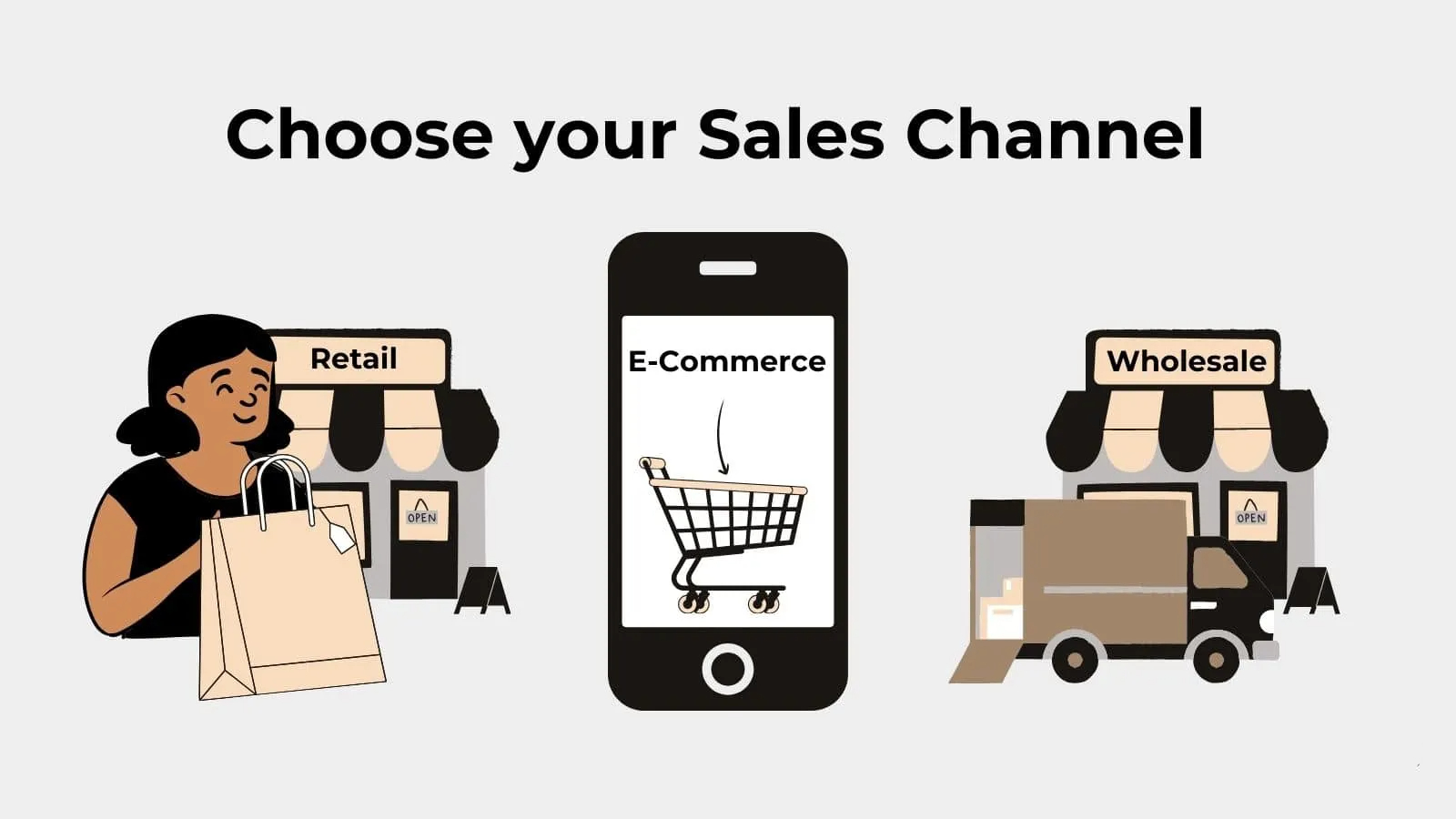
Here’s a breakdown of the most common channels in the beauty industry.
The easiest and most profitable Sales Channel: E‑Commerce
E‑Commerce is the digital storefront. It’s open 24/7, accessible worldwide, and the costs are often lower than physical retail.
We recommend using Shopify (no paid advertising). You can create a highly professional online store in just a few clicks without any programming knowledge. The best thing about Shopify is that you can manage everything yourself. You can add products or publish new blog articles in just a few minutes.
The biggest difference to other CMS such as WordPress is how seamless, and fully automated everything is processed when an order is placed. You also don’t have to worry about updates or server problems. It always works smoothly and you can focus on what you are best without having to deal with technical issues.
Many people think Shopify is for amateurs, but in fact big brands like colourpop, jeffreestarcosmetics or fashionnova still use Shopify. Because it’s simply more cost-effective than hiring expensive specialists for maintenance.
Retail is about the Experience
It means you can sell your products in your own store, so that customers can try before they buy, get a feel of the product, and take it home immediately.
If you want to build a strong brand, it’s still a great way to strengthen the connection with your customers. Think of a Rituals store, and you will immediately feel certain emotions and a certain feeling.
Even if customers don’t buy directly in the store, it increases the likelihood that more people will come into touch with your brand and buy online later.
A physical connection to your products when the customer holds it in their hands and smells it is much more emotionally engaging than seeing pictures of products online.
Think big and cosider Wholesale
Wholesale is about selling your products in bulk to retailers. It can provide a safe source of income and get your products on many shelves.
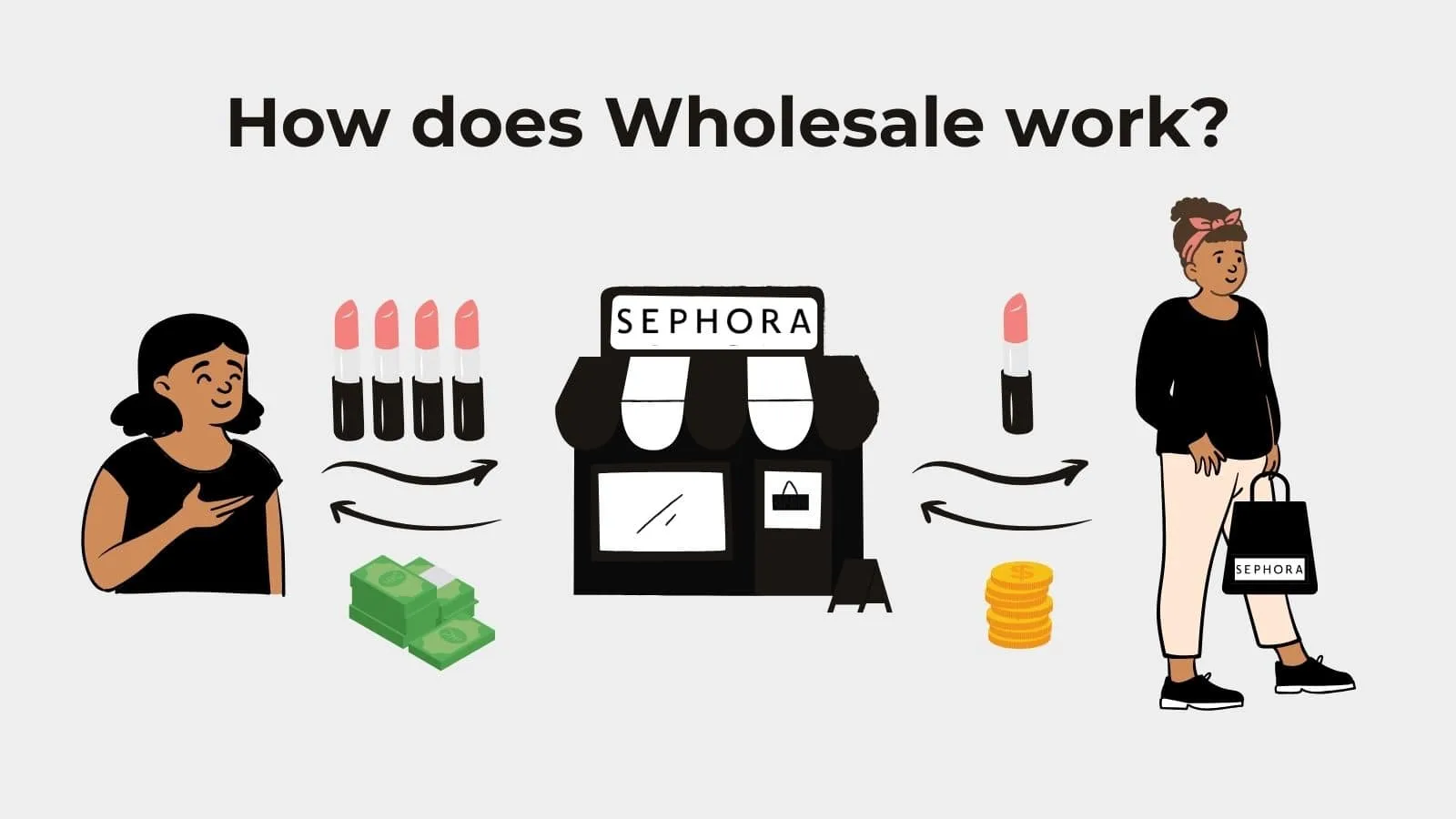
If you have an innovative product or a strong brand, it’s a great way to make additional sales. Keep in mind, however, that you will lose some profit margin in comparison to E‑Commerce sales, as the retail store that buys your products has to make a profit as well.
We recommend pitching your products to small boutique stores first and gaining your first experience there. Later on, you will have a blueprint and can venture into large chains like Sephora.
Step 6
6. Define Your Distribution Countries
When choosing countries or regions to start selling your makeup line, investigate which regions or countries show a demand for your type of makeup.
Look into local beauty trends, consumer behavior and your competitors.
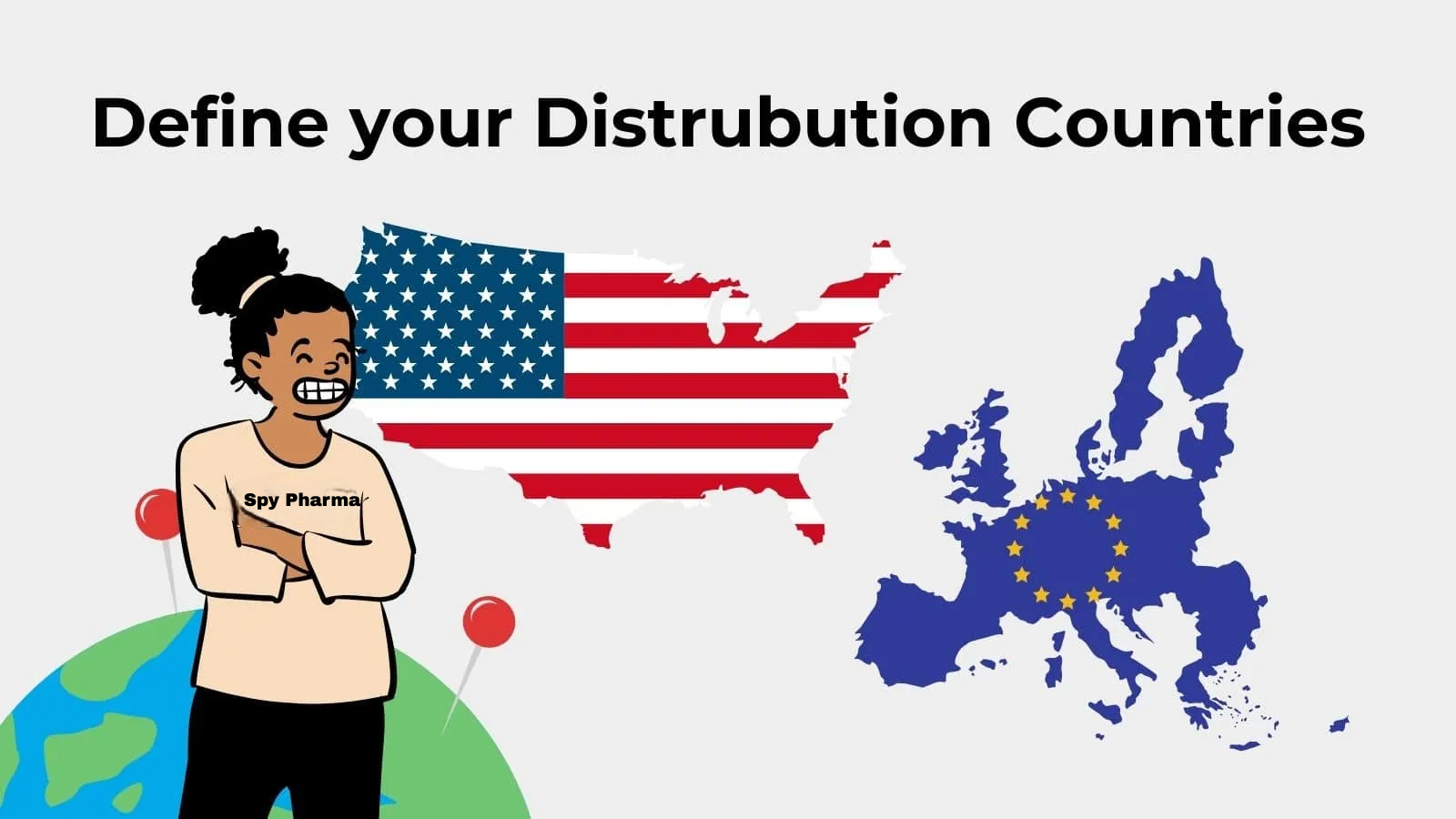
Start a Makeup Line in The Right Country
Your products and marketing should appeal to the area’s cultural preferences.
Imagine your makeup line includes a range of sunscreens, and you’re considering expanding to markets like China or South Korea. It’s important to know that people in these countries often prefer skincare products that offer high SPF, protection against pollution and whitening effects.
Make sure your product-market fit is good.
Consider Economic Factors like the Purchasing Power
Analyze the economic situation and consumer spending patterns to know the market potential.
For example, if considering expansion into regions with lower average incomes, such as some areas in Southeast Asia or Africa, it would be strategic to offer cheaper products with multifunctional benefits.
A line of basic and affordable skincare items that serve as both moisturizers and sun protection, could appeal to consumers who wish to maintain a skincare routine on a budget.
Step 7
7. Check Local Regulations
Understanding cosmetics regulations is important before you sell your makeup line.
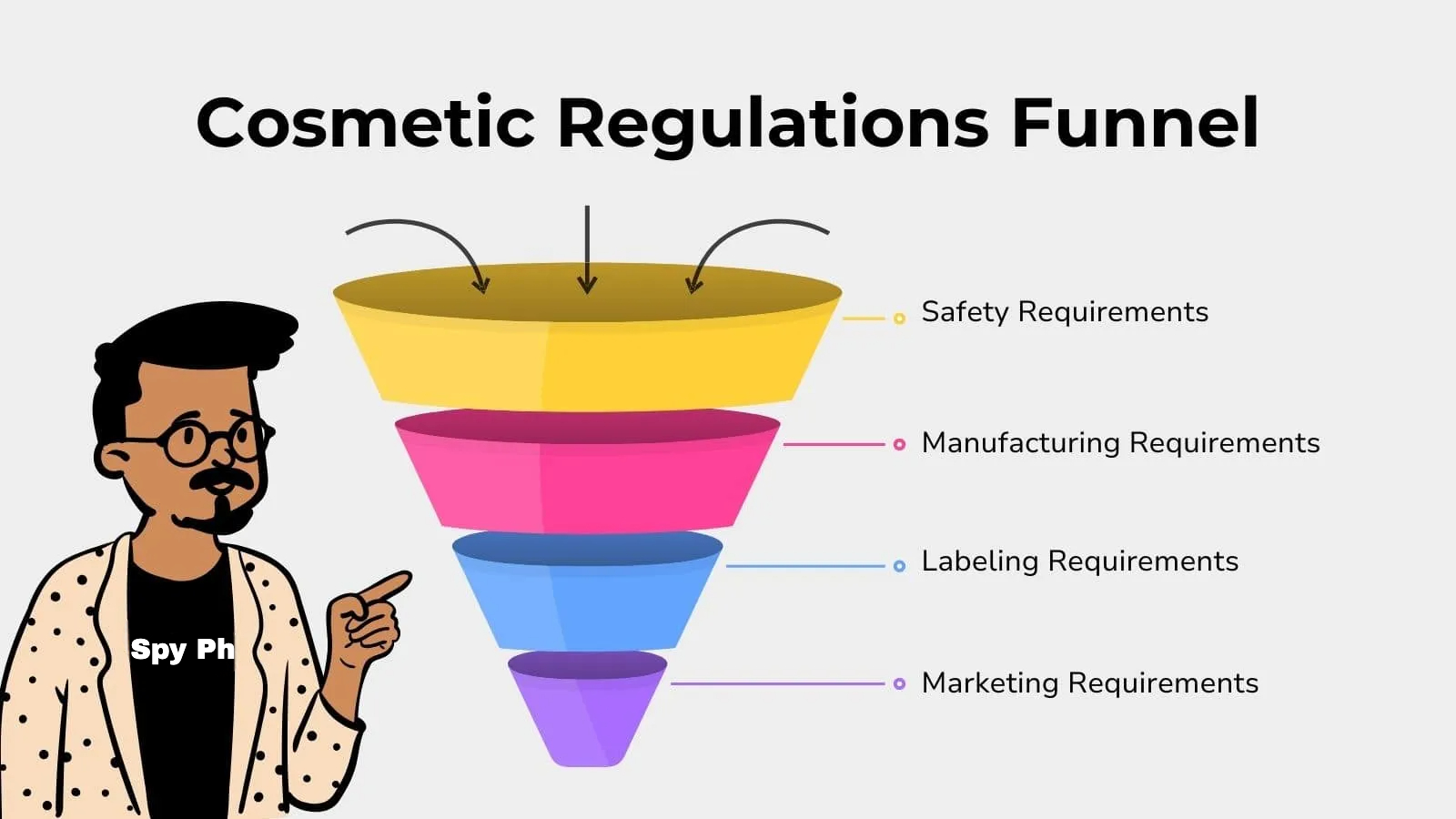
Compliance isn’t just about meeting legal standards; it’s about building trust with your customers. They need to know that your products are safe and meet the quality standards promised by your brand.
Depending on where you plan to sell (see step 6), you may have to comply with state, federal or international standards. Generally speaking, there are four broad areas of regulations for cosmetics: labeling, safety, manufacturing and marketing.
1. Safety Regulations
Safety regulations are in place to protect consumers from any potential hazards that could arise from using your makeup. These regulations usually pertain to the ingredients & components used in production, testing methods, and more.
2. Manufacturing Regulations
Manufacturing regulations involve standards for ingredient sourcing, product formulation and production processes. Compliance with these regulations is mandatory for product safety. Usually, the cosmetic manufacturer you are working with is responsible for this.
3. Labeling Regulations
Labeling regulations ensure that customers can make informed decisions when buying your products. The regulations cover labeling requirements such as ingredients list and warning statements.
4. Marketing Regulations
Finally, marketing regulations are meant to protect customers from deceptive or misleading advertising. Depending on where you’re selling, there may be additional regulations related to age restrictions, product claims and more.
Step 8
8. Choose your Marketing Channels
Marketing is how you attract, engage, and convert your target audience into loyal customers. It is about finding the right mix of strategies that resonate with your brand and audience.
It’s a continual process of testing, learning, and optimizing.
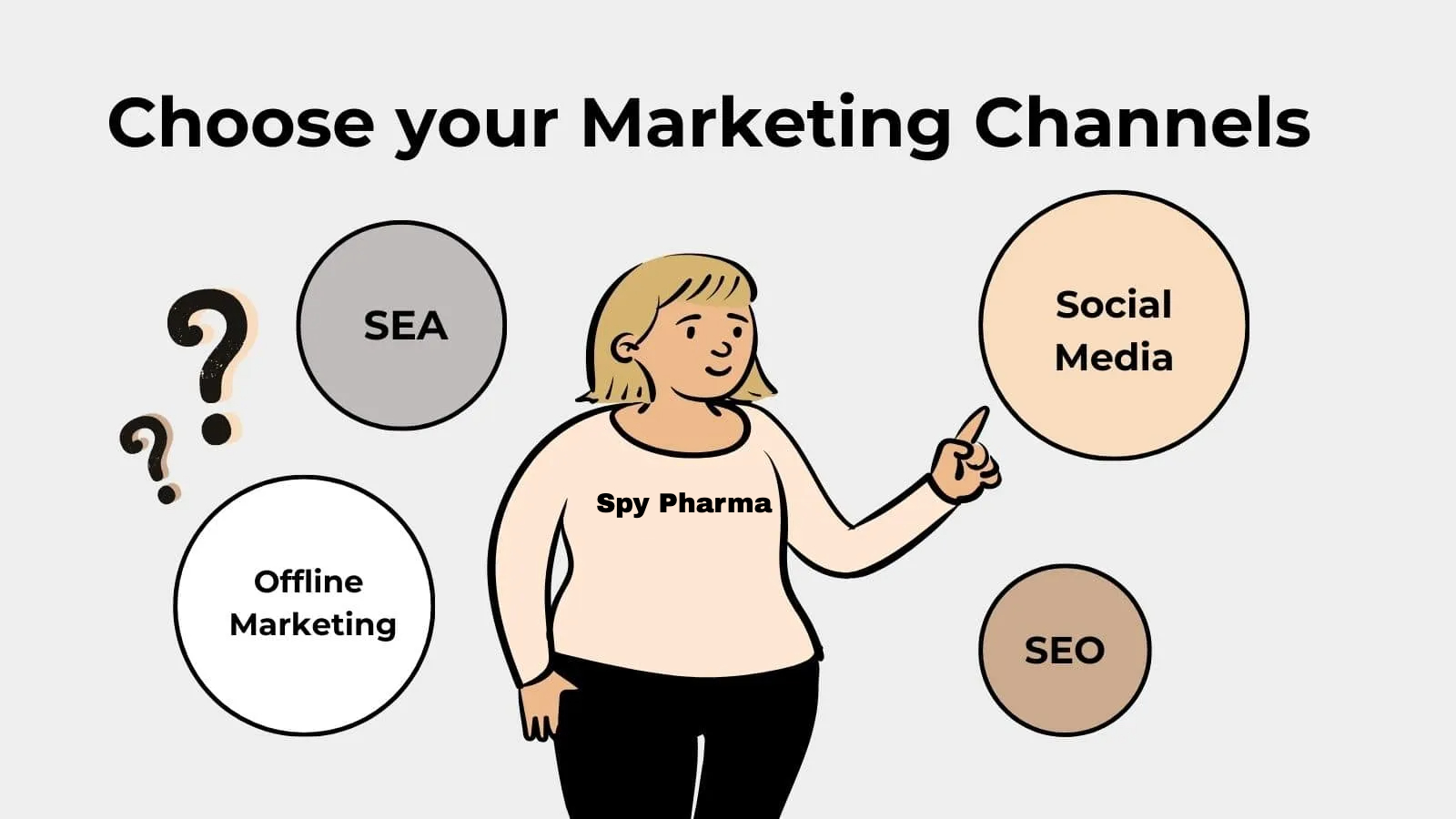
Here are the different options to promote your makeup line:
Search Engine Optimization (SEO) Ensures Your Long-Term Success
SEO stands for Search Engine Optimization, which is the process of optimizing your online shop to increase its visibility in Google search results. The goal is to rank in the first spots on Googles search results for specific search queries that are relevant to you.
Let’s stick to our example:
The first step in SEO for your organic lipstick line is to conduct keyword research to identify the phrases and search terms used by potential customers when searching for your products. In our case, it could be something like “organic lipsticks”, “best organic lipstick line”, buy organic lipstick online”.
Next, you’ll need to refine your website for the selected keywords. This step requires a bit of expertise. It involves enhancing elements like titles, meta descriptions, and various other components of your website to ensure they stand out in search engine results pages (SERPs).
Search Engine Advertising (SEA) for Direct Sales
SEA is about paid advertising on Google. It provides immediate visibility and traffic, albeit at a cost. You pay per click on your website. The cost per click varies depending on the competition on the keyword you are targeting.
The lower the competition on a keyword → The lower the cost per click
The higher the competition on a keyword → The higher the cost per click
Since the cost per click varies greatly, it’s hard to say how much it costs. But you can calculate with 2–3€ per click for medium contested keywords.
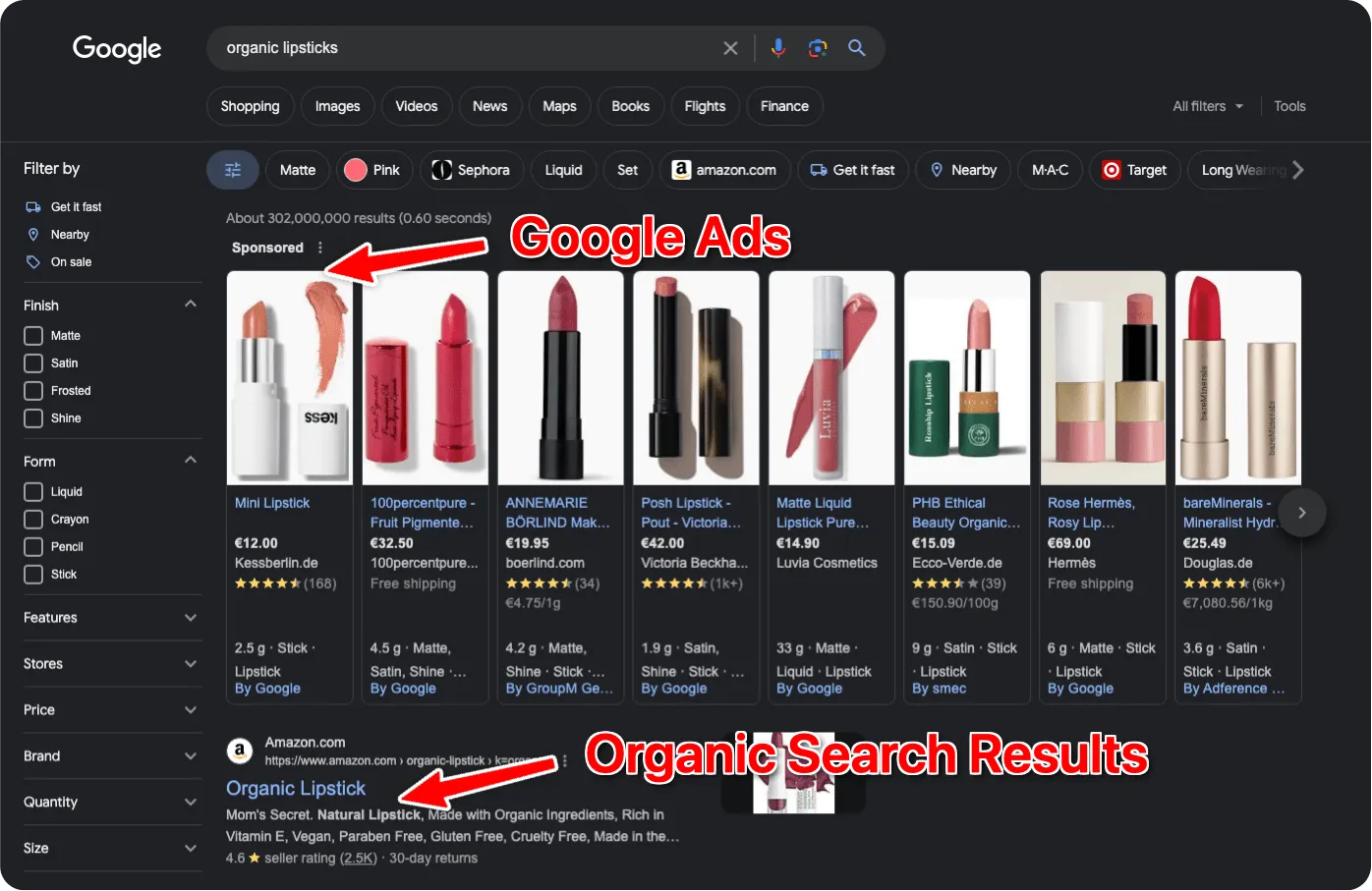
As you can see, the first search results are marked with “Sponsored”. This means that these brands run Google Ads for the keyword “organic lipsticks”, so their lipsticks show on top of the search results for this specific search query.
Social Media Marketing for Brand Awareness
Social media is powerful for brand engagement and awareness these days.
Platforms like Instagram or TikTok can showcase your products through short clips and engaging posts, and also can allow you to interact with your customers.
One great way to promote your products without doing too much self-promotion is to work with user-generated content creators (UGC). These are micro influencers who create videos about your products.
They act as an unbiased voice, and it is often enough to send them products free of charge in return.
Offline Marketing: Old but Gold
Offline marketing still works well for promoting a makeup line.
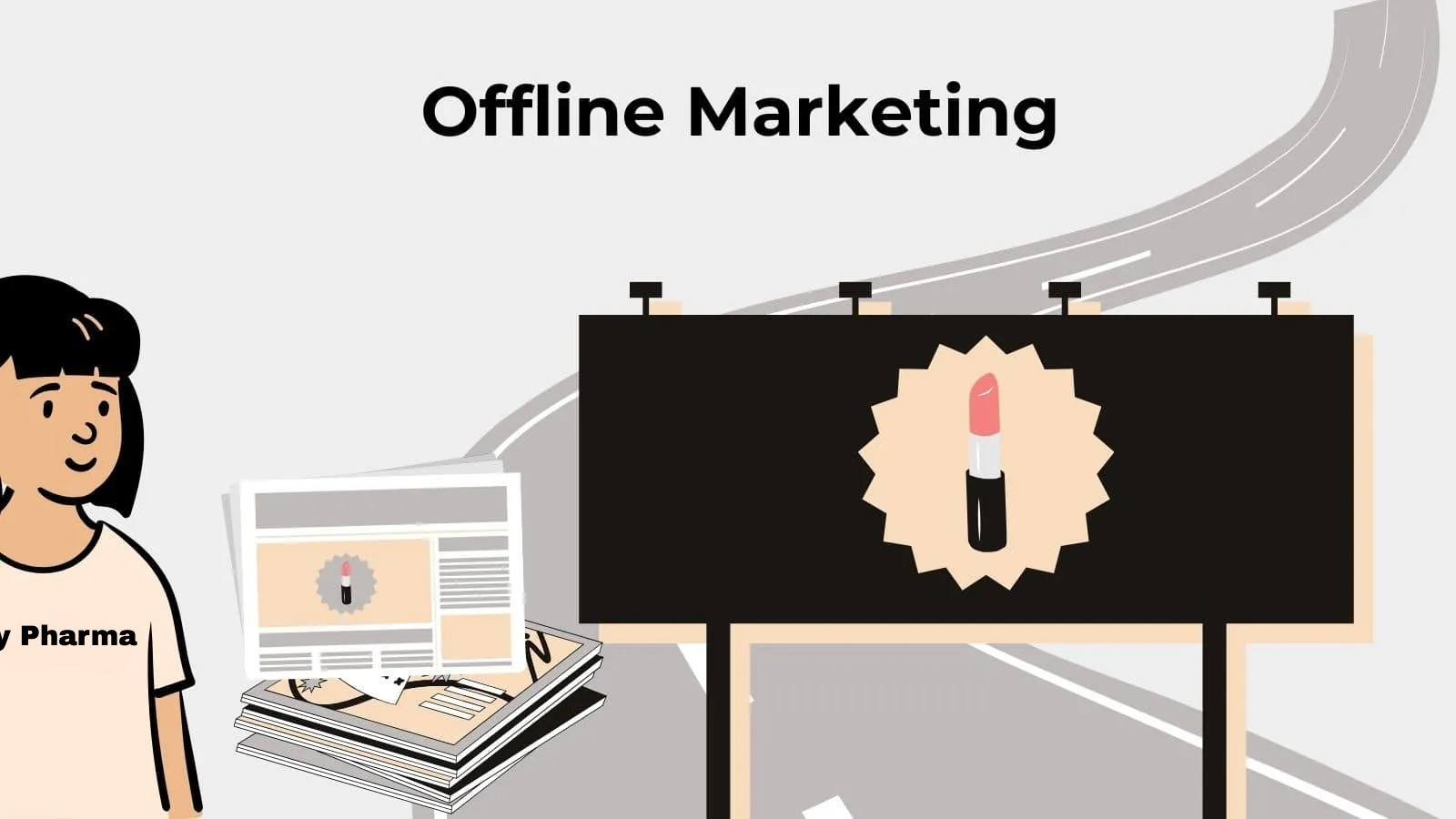
Of course, the advertisement is not as targeted as Google Ads, but with print ads in magazines, newspapers, and billboards you can reach a broad range of people and generate a lot of awareness.
It helps to burn your brand subconsciously into people’s minds.
Even if they are not looking for an organic lipstick or not even consciously aware of your ad when they see it, it will have a subconscious effect.
Contact us
Get Started Today
Start a makeup line may appear challenging, but with this guide and our help, you are off to a great start.
As a cosmetic manufacturer specializing in color cosmetics, we’re here to support and simplify your entry into the beauty industry.
We can collaborate to select the ideal products for your makeup line. We’ll provide the expertise you need to ensure your products are market-ready and competitively priced.
Take the first step towards creating a makeup line that stands out — get in touch with us, and let’s bring your visions to life.
More Useful Guides
![White Label Cosmetics Explained: Pros & Cons in 2025 [+Guide]](https://www.spypharma.com/uploads/blog/white-label-cosmetics-explained.jpg)
White Label Cosmetics Explained: Pros & Cons in 2025 [+Guide]
![Top 17 Cosmetic Manufacturers for Beginners in 2025 [+Guide]](https://www.spypharma.com/uploads/blog/top-17-cosmetics-manufacturers-for-beginnerstop-17-cosmetics-manufacturers-for-beginners.jpg)
Top 17 Cosmetic Manufacturers for Beginners in 2025 [+Guide]
Low MOQ Cosmetic Manufacturers: Be Aware of These Dangers

Ultimate Guide for Vegan Private Label Cosmetics in 2024
![Top 9 Luxury Private Label Cosmetics Manufacturers [+Guide]](https://www.spypharma.com/uploads/blog/luxury-private-label-cosmetics-manufacturers.jpg)
Top 9 Luxury Private Label Cosmetics Manufacturers [+Guide]
![Starting a Lip Gloss Business: A Step-by-Step Guide [2025]](https://www.spypharma.com/uploads/blog/starting-a-lip-gloss-business.jpg)