![How To Start a Cosmetic Business in 2025 [+Case Study]](https://www.spypharma.com/uploads/blog/how-to-start-a-cosmetic-business.jpg)
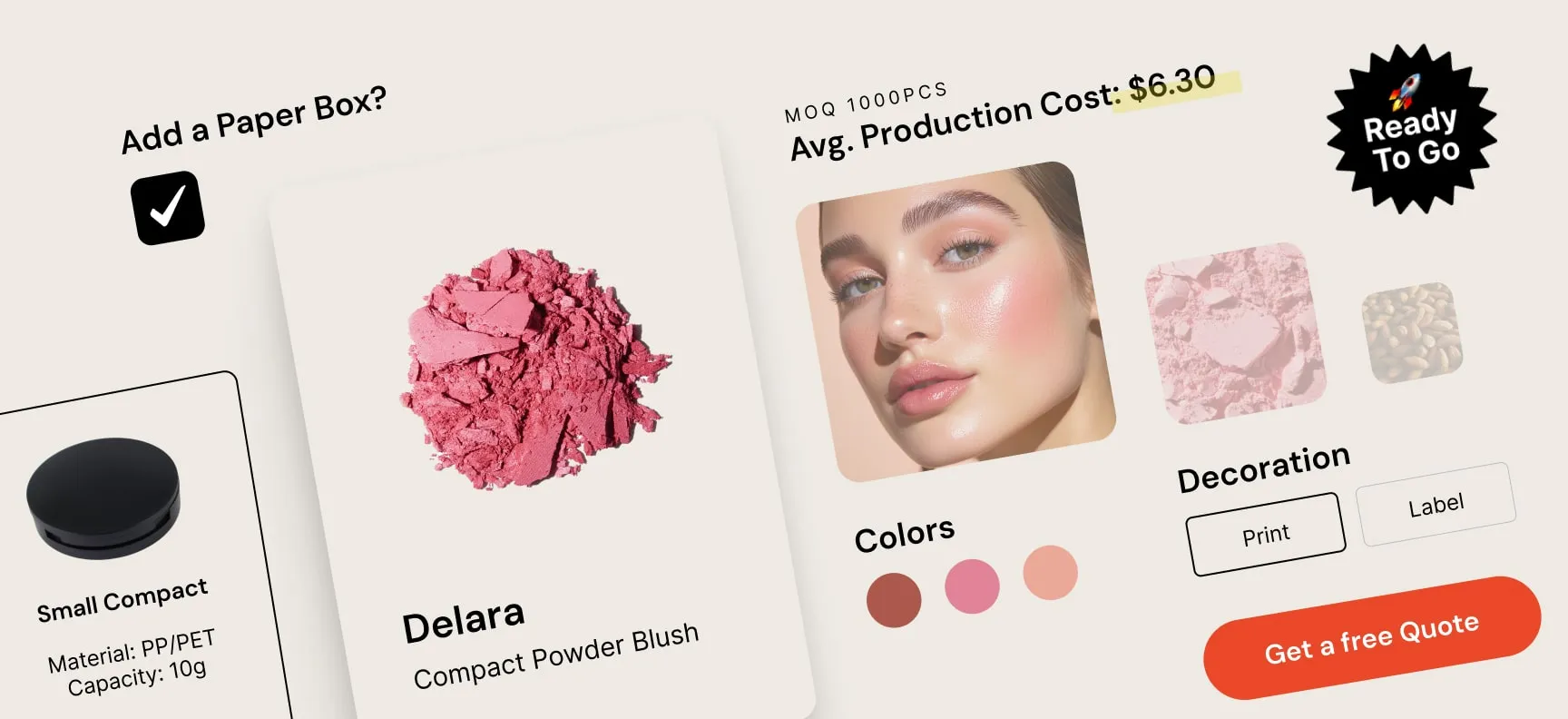
In this blog post, we’ll go through everything you need to start a successful cosmetic business.
We will cover all the essentials to get your business off the ground and thriving. It’s important to have a plan in place to be successful after launching your cosmetics line.
Maybe you want to raise money for your venture from investors or friends and family. In this case, a plan is crucial not only for yourself.
It’s a blueprint for success.
What You Are About To Learn
First up, you’ll need to understand the market.
We’ll look at how to detect trends and what your competitors are up to. You’ll find your own sweet spot in the beauty industry.
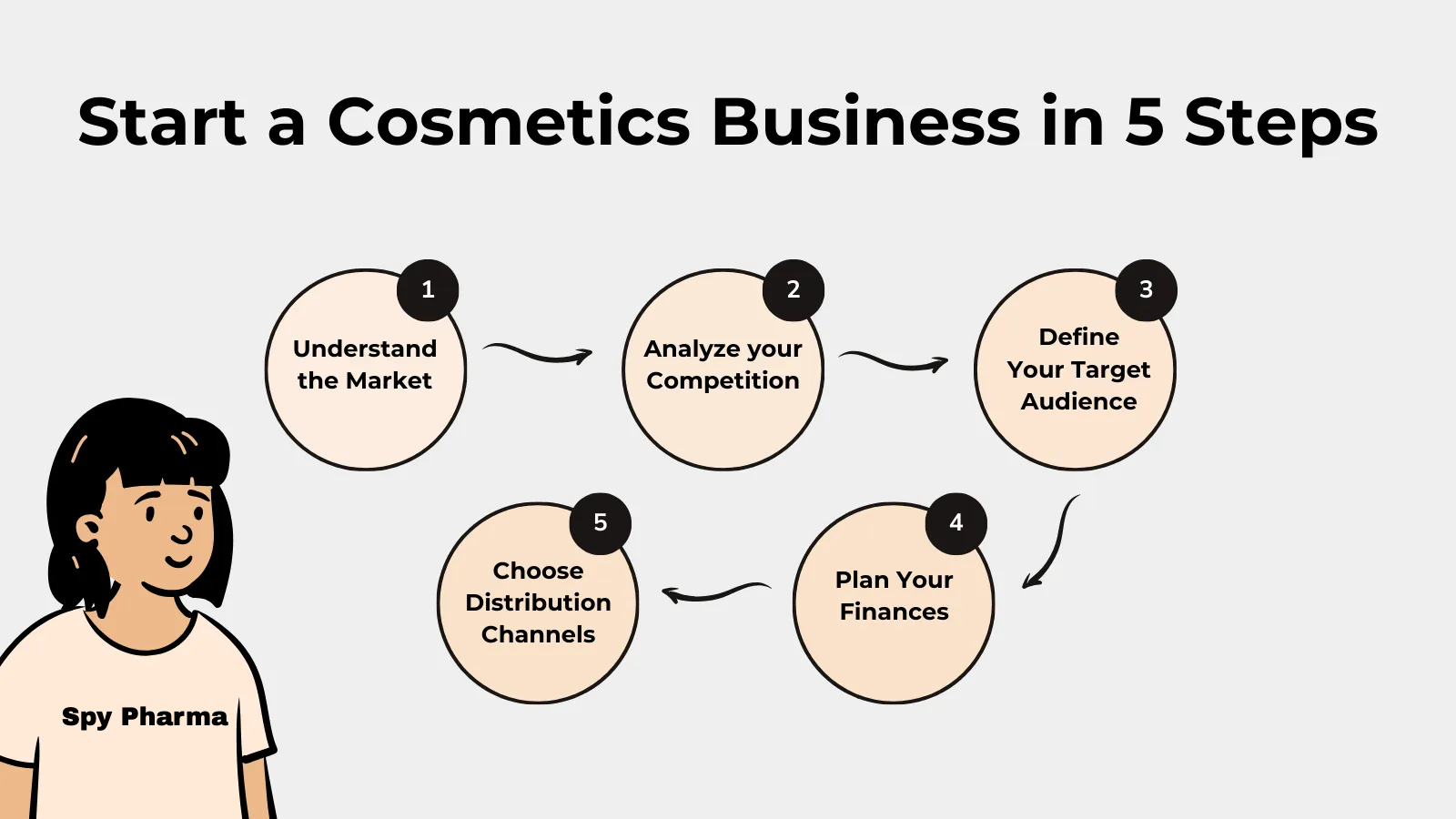
Next, we’ll talk about defining your target audience & buyer persona. It’s all about figuring out who’s going to buy your products and getting deeper into what makes them tick.
Then, we’ll choose the right product category. You’ll learn how to pick the lane that’s right for you. Of course, we can’t forget about managing the financial part, so we’ll go through some financial modeling. Planning your budget and understanding your numbers is crucial.
Finally, it’s all about getting the word out with Marketing & Distribution Channels. We’ll develop strategies to ensure your products find their way to your customers.
Lastly, we’ll wrap up with a Case Study, where we’ll break down what worked for a successful brand to rewind the concepts we went through.
- Understanding The Cosmetics Market
- Analze Your Competition
- Define Your Target Audience & Buyer Persona
- Plan Your Finances
- Choose The Right Distribution Channels
- Case Study: E.L.F. Beauty
Step 1
What You Are About To Learn
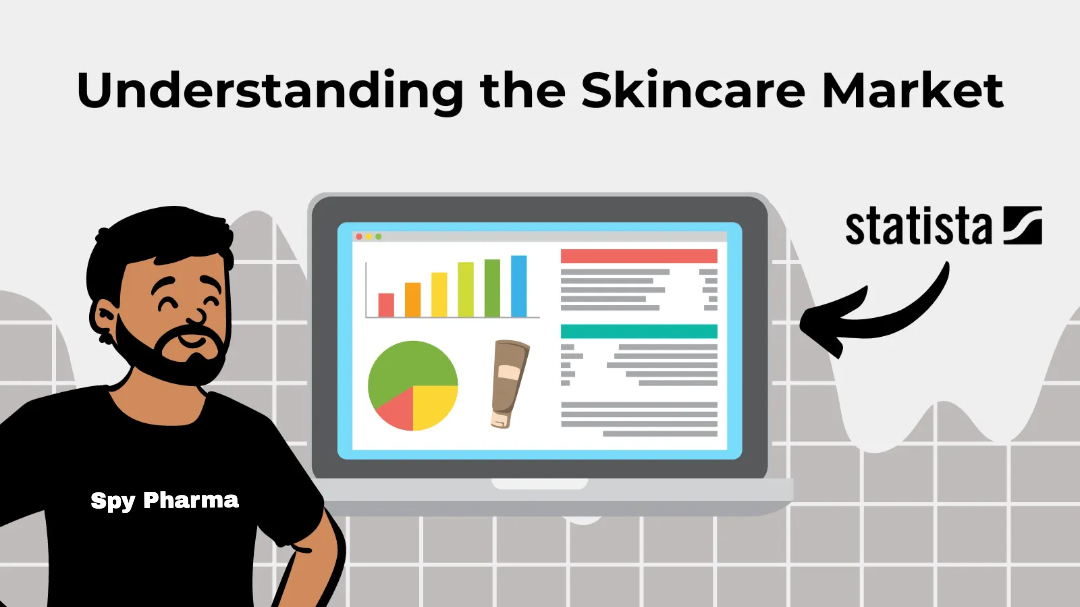
Starting with a solid understanding of the cosmetic market is essential. Maybe you’re already familiar with current trends and you have a feeling for what’s selling well from a consumer perspective- that’s a great starting point.
But we need to dive deeper.
Conducting In-Depth Research
For instance, you could study beauty magazines, follow influential beauty blogs, explore industry reports and guides for industry professionals.
You’ll gain insights not only about product specifics but also explore the business side.
Your products may be awesome, but you need to understand how beauty companies operate, learn about distribution channels and the latest research to stay on top of the game.
Analyzing Industry Data
You’ll also want to explore statistics, reports, industry studies, and consumer survey results.
You may already have a product in mind you want to sell.
But try to keep an open mind when analyzing the market high-level. It is important to understand WHAT you want to sell, WHERE you want to sell it and to WHOM.
Say, you’re exploring the sale of makeup products in the US, you might be interested in what’s selling the most.
According to this report, it’s Foundations.
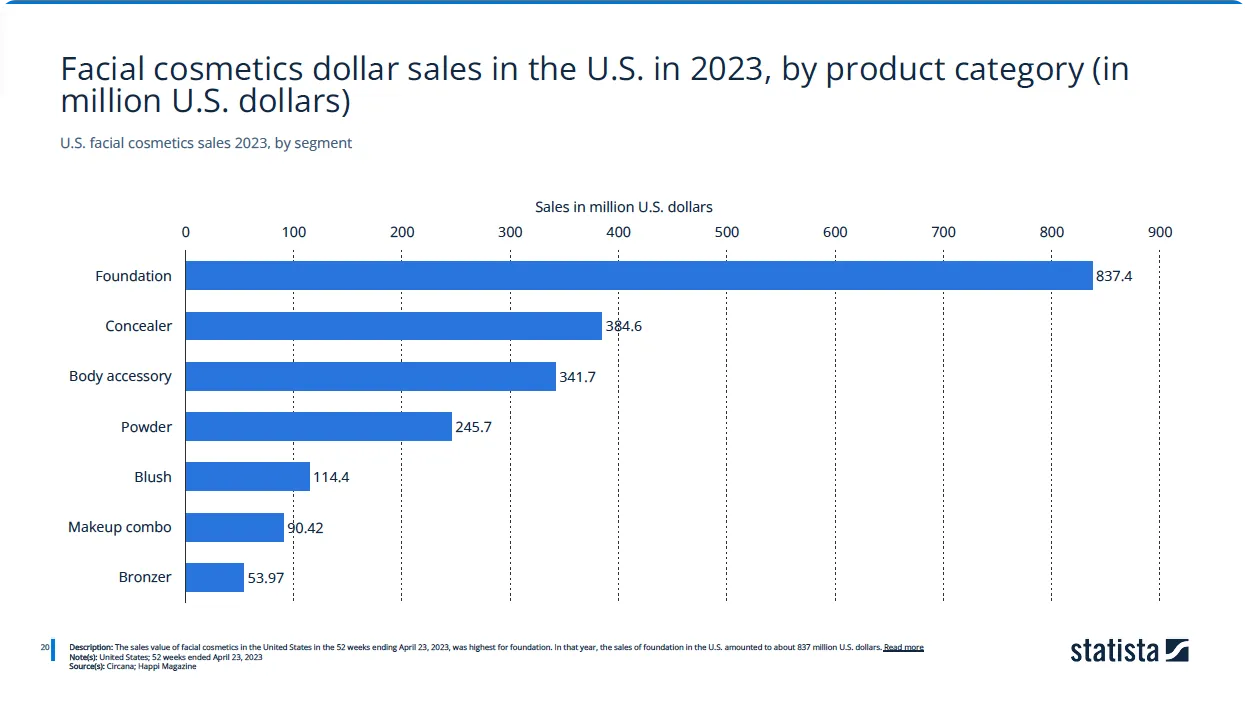
This information alone doesn’t tell you much about whether it’s a good or bad idea to sell Foundation. You would need to drill down into how the sale of foundations has developed over time, what is its share of the overall market, is it usually sold in combination with other products and so on.
It is also important to read statistics the right way.
Does the chart show revenue or units?
Is it overall sales, retail, or online?
How are certain products categorized?
How was this data collected?
Identifying Specific Products
Once you’re done with high-level research, you may want to consider specific products. This also affects the choice of cosmetic manufacturer you’ll work with.
Let’s go through an example.
Let’s assume you’ve noticed a trend on TikTok lately. More men get into grooming, so you think it could be an interesting category to explore.
You may want to start your business in your home market — for example, Germany — and then expand further to other European countries or to the US. In this case, you want to look at data specifically about men’s cosmetics use.
For example, from this data point, it seems like the majority of men report that they use skin care either never or less than once a month.
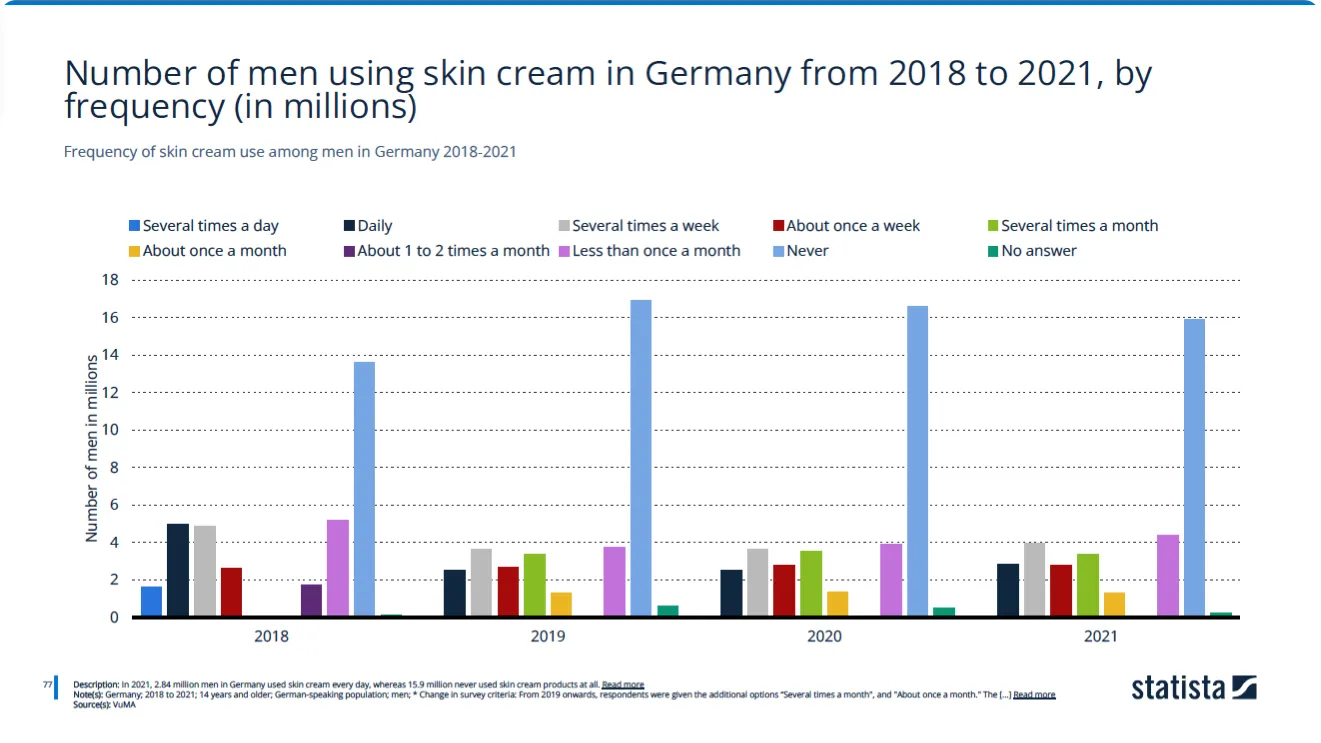
You may need to do some calculations and analysis to find out exactly what you are looking for. The number of men using skin care products daily looks flat, but you may need to look at the development over a longer period.
Targeting Niche Markets
Most importantly, you’ll need to understand if the market you’re selling your products to is a mass market or if you’re looking to sell in a more niche market.
Mass markets are more competitive and aim for lower price points but generate the majority of total revenue.
They are harder to compete in and be successful.
You may need to invest a lot more into marketing to acquire new customers and retain them, but you also have high revenue potential.
In smaller markets, your products need to target a specific niche. The demand will not be as high, but you’ll be able to enter the market with a lower budget and more effective marketing efforts.
Step 2
2. Analyze Your Competition
Once you understand the cosmetic market well enough, it’s time to analyze your competition.
This may sound obvious but it’s important to understand who you’re competing against. This goes back to understanding the market you’re in.
Identifying Competitors
Let’s imagine you intend to launch a series of lip oils.
You did market research and you understood it’s a growing category.
Next, you want to see what similar products are sold in your target market.
Which companies are out there that you’re competing with?
But don’t stop there, you may need to dig deeper to find brands that are still comparably small but growing fast.
It is important to keep in mind, who you’re actually competing with. There’s direct and indirect competition.
Choosing a Niche
Your lip products might have a special ingredient that makes them unique.
Maybe it’s plumping — that puts it in a sub-category. Or you may be targeting a certain demographic.
This narrows down the products you’re directly competing with, but there is also indirect competition.
These are products that could substitute yours. It’s better to be on the realistic side when you do this analysis.
Analyzing Your Competitors
Now that you know who your competitors are, let’s look into how to analyze their positioning.
What are the things you want to check?
First, you’ll want to look at their product offerings.
- What options do they have?
- What are their price points?
- How do they differentiate themselves through specific features?
Try to examine their distribution channels.
Are they selling online, in boutique stores, or in large retail chains? This can tell you a lot about their target demographics.
You can benefit from your competitors’ mistakes. Look for recurring comments about what their customers love and what they don’t.
If many reviews on a competitor’s lip oil complain about the taste or feel, those are areas where you could differentiate and improve.
Understanding Competitor Operations and Scale
Lastly, you’ll want to get an idea about the scale of your competitors’ operations.
It is very hard to compete with a product that sells really well already in a certain category.
The more revenue your competitor generates, the harder it is to compete with.
That tells you the size of the company, but not necessarily how well a specific product sells. In any case, it is important to know who you’re up against.
Don’t be discouraged if there are existing companies in the same space.
There will be for sure.
It just means you’ll need to be even more creative with brand development, marketing or differentiate your product even stronger to set it apart.
But be realistic about your chances of success.
Step 3
3. Define Your Target Audience & Buyer Persona
Now that we have a clear understanding of the market and our competitors, it’s time to zoom in even closer and define exactly who we are selling to.
This is where we create a detailed picture of our target audience and develop specific buyer personas.
These personas are our ideal imaginary customers, and they will guide every decision we make, from product development to marketing strategies.
Identifying the Broader Target Audience
First, let’s start by identifying the broader target audience for your products.
Think about the demographics such as
- age
- gender
- income level
- geographic location
Diving into Psychographics
Next, we dive deeper into the psychographics—these include lifestyle, values, and attitudes.
Does your target audience prioritize eco-friendliness? Are they influenced by skincare experts, or do they prefer real-user testimonials?
Understanding these aspects will help you connect with them on a deeper level.
Crafting a Buyer Persona
Now, let’s craft a buyer persona.
This is a fictional character that embodies the characteristics of your ideal customer.
Let’s say our persona is named ‘Sophia’.
Sophia is a 42-year-old corporate executive living in a suburban area.
She follows skincare blogs, prefers products that are dermatologically tested and safe for sensitive skin, and is willing to invest in high-quality skincare solutions that promise long-term benefits.
Gathering Real Data
To make these personas truly useful, gather real data through surveys, interviews, and social media interactions. Ask potential customers about their skincare routines, their favourite products, and what they feel is missing in the market.
The more detail you can gather, the better you’ll understand their needs and preferences.
Remember, the goal is to think like your customer.
This way, you ensure that your product fits into their lifestyle and meets their expectations.
Step 4
4. Plan Your Finances

Alright, let’s dive into one of the most critical aspects of launching your cosmetic business: Financial Planning.
You may have an awesome product but your finances need to work to build a sustainable business.
Let’s first explore which costs we need to account for before we move on to pricing our product and managing our cash flow.
Identifying Start-Up Costs
First things first, we need to talk about Start-Up Costs.
These are all the expenses you’ll encounter just to get your business off the ground.
This includes:
- registering your company
- building up your first inventory
- setting up your infrastructure
- and so on
You should make a list of everything you’ll need to spend money on before you make your first sale.
Understanding Operating Expenses
Next, let’s consider your Operating Expenses.
Depending on your distribution channel, there might be different costs. If you sell online directly to consumers, there will be logistics costs.
Either you ship the products yourself or you outsource it, in any case, there will be costs that you need to account for.
If you get your products into Sephora, you’ll need to give a share of your margin to them. This is usually more than you pay for the cost of logistics.
But In both cases, these costs of selling your products need to make it into your calculation.
Pricing Your Product
With that in mind, onto pricing your product.
Let’s say you’re selling a line of eye products such as Mascara.
You’ve done market research, analyzed your competitors, and ordered your first batch of products.
Now, how much should you sell your Mascara for?
Calculating Total Cost per Unit
To figure this out, you need to calculate the total cost on a unit basis. That means for every product you are selling, what’s the associated cost?
Let’s assume you buy a Mascara from a supplier for $2.80 per unit, and you sell it online directly to consumers.
Based on some market research and surveys you did, you would like to sell it for $13.95.
Is this a reasonable price to sustain your business?
Calculating Gross Profit
$2.80 represents your ‘Cost of Good Sold’.
On top comes the cost of logistics for shipment. Depending on the size of your baskets, we can assume that it costs around $0.28 per unit. That’s comprised of shipment and material costs.
If you sell your Mascara for $13.95, what remains after you deduct the cost of goods sold and logistics, is $10.87.
Understanding Overhead Costs
Next, you need to understand how much you’ll have to pay for marketing, personnel, and other administrative expenses such as rent, etc.
In business, this is called overhead. This is all costs, not directly related to the production and shipment of the Mascara.
To calculate this on a unit basis, you’ll need to divide the total cost by the number of units sold.
Calculating Operating Profit
For simplicity, let’s assume you only sell Mascaras — 2000 units per month. Every month, you have $10.000 in personnel costs, $2.000 for office space, and $500 for software.
This equals $12.500 per month divided by 2000 Mascaras sold. That’s $6.25 per unit sold.
That leaves $4.62 from every Mascara sold. That will be your operating profit, which is a 33% operating margin.
Finally, you need to deduct taxes and loan payments should there be any to get to the net profit, which is your bottom line.
So, $13.95 indeed sounds like a reasonable selling price.
Forecasting Sales
But you have to make sure that you will be able to generate a profit in the future with the selling prices you determined.
Last but not least, you should be able to forecast your sales. Estimating how many units you can sell can be challenging, but it’s vital.
Start conservatively: it’s better to be pleasantly surprised than to fall short.
Step 5
5. Choose the Right Distribution Channels
Alright, let’s talk about how you’re going to get your products into the hands of your customers.
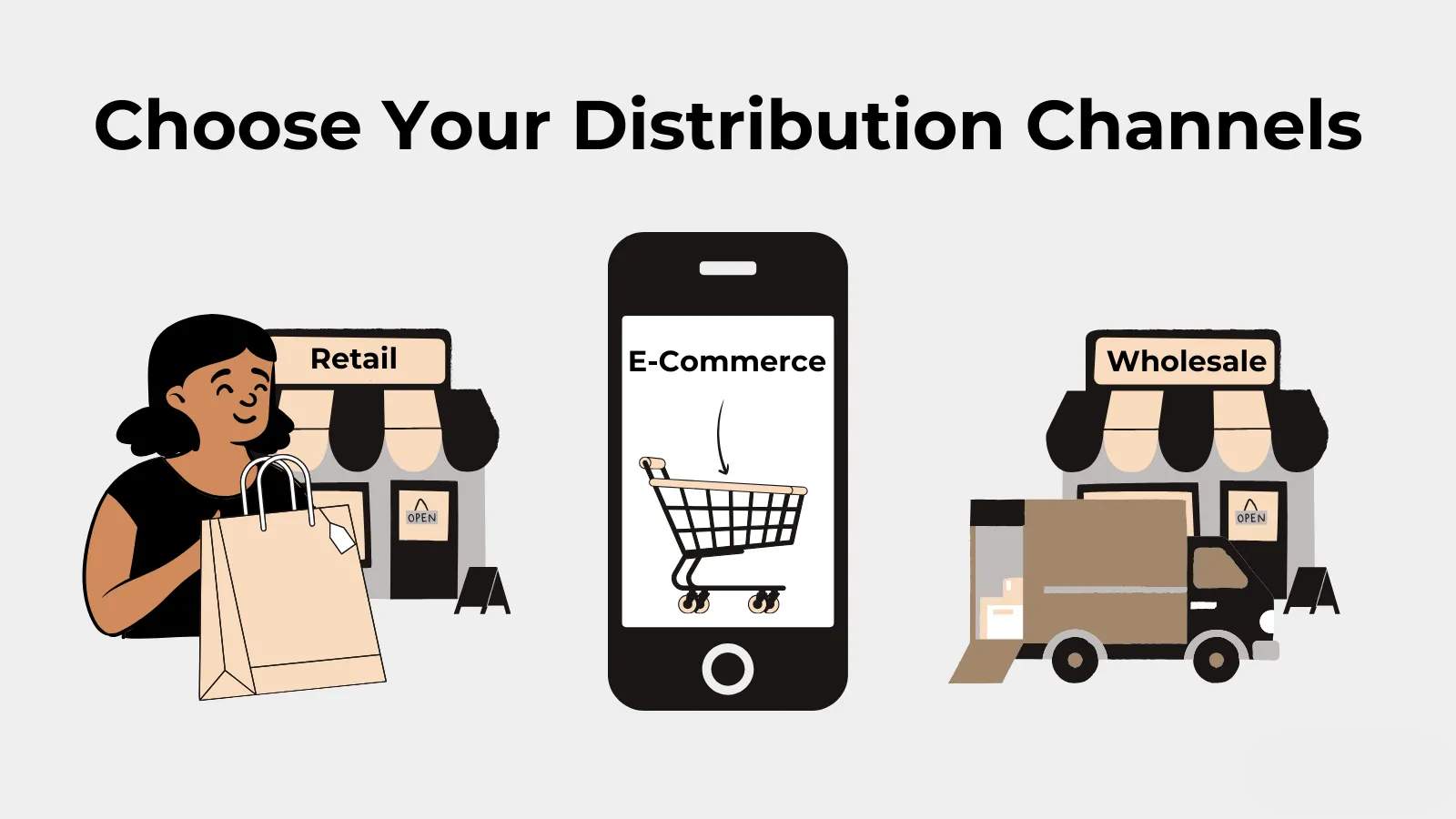
When we talk about distribution channels, we’re really looking at the pathways that connect your product with your buyers. Each channel comes with its own set of perks and challenges, so let’s walk through them one by one.
Direct to Consumer (D2C)
First up, Direct to Consumer, or D2C.
This is when you sell directly through your own website or maybe an e‑commerce platform you set up.
You call the shots.
You control the brand, the pricing, and the customer experience from start to finish. You also get to gather loads of customer data, which is cool for tweaking your marketing or product.
Retail Distribution
Next, let’s talk about Retail Distribution.
Think physical stores—could be big names or cute boutiques.
Here’s the upside: being on shelves can give your brand instant credibility and visibility. Customers often trust a product more when they can pick it up and look at it.
Plus, if you land in retail, you could see your sales jump big time.
But here’s the catch: those retailers are going to take a cut of your sales, and sometimes, it’s pretty steep. And you have to play by their rules when it comes to how your product is displayed and promoted.
Wholesale Distribution
Moving on to Wholesale.
This means selling your products in bulk to other businesses—like online shops, spas, or salons.
It’s great because it can get your product out there in a big way, fast, and you deal with fewer, but larger, orders.
However, your profit per item drops, and you have less say over how your products are sold once they leave your hands.
Online Marketplaces
But, it’s a crowded market, and standing out can be tough—not to mention the fees and the cut they take. Also, you won’t get to weave that personal brand experience you might want.
So choosing the right channels boils down to understanding your audience, your business capacity, and how hands-on you want to be with sales.
Start with one, see how it goes, and don’t be afraid to mix things up as you grow.
example
Case Study: E.L.F. Beauty
Let’s do a case study to rewind what we’ve learned so far.
E.L.F Beauty is an international company offering high-quality, affordable makeup and skincare products. They are publicly traded since 2016 so they need to report their quarterly earnings.
Let’s look at their financials and see how this can help you gain a deeper understanding of your business starting up.
Income Statement Overview
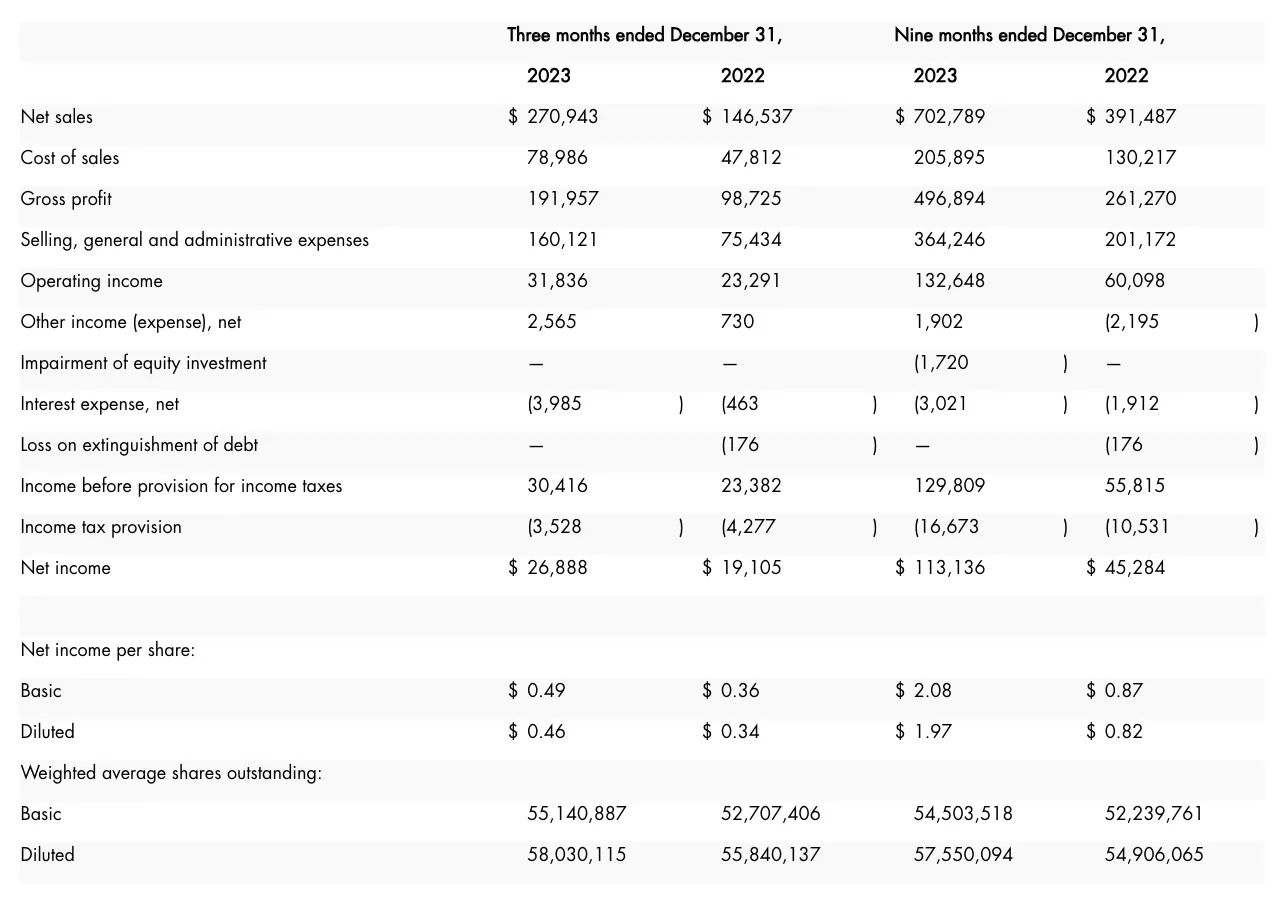
Now, let’s look at their Income Statement for a quarter of a year.
Their net sales — that’s the total revenue — are $270 Million. That’s up 85% compared to one year ago.
Comparisons are often done to the same period one year ago for companies that are impacted by seasonality.
E.L.F sells its products direct to consumers, retail, and other online marketplaces. This gives them wide distribution to grow their business topline.
Gross Profit and Margin
Next, we’ll look at how much they keep from their net sales after the cost of sales. That’s what’s called ‘Gross Profit’.
For E.L.F., they managed to improve their ‘Gross Margin’ to 71%. Their gross profit is $78 Million in total.
That’s what’s left to pay for all other expenses of the company. Especially for growing companies, it’s important to increase the gross margin over time.
E.L.F. managed this by lowering their cost of sales.
The net sales went up, but the cost did not by the same amount. They claim this is due to foreign exchange impacts, improved transportation costs, and other cost savings.
You should also have a healthy gross margin but keep in mind it can be improved over time, it does not need to be extraordinary when you launch your brand.
Especially at low order quantities.
Over time, you will be able to increase your gross profit by better purchase prices, improved cost of logistics, and other cost measures that will get you there.
Operating Expenses
E.L.F’s gross profit is $191 Million. They do have to pay their staff, rent, spend money on advertising and other fixed costs.
That’s what’s called Selling, general and administrative expenses, or SG&A in short. It’s $160 Million, that’s a lot of money, it’s almost 60% of their revenues.
It’s more than it costs to manufacture the cosmetics.
E.L.F claims it is due to an increase in marketing spend, employee compensation, visual merchandising, and other costs like paying consultants and so on.
Especially marketing spend can be a large share of your net sales if you want to grow your brand.
Operating Income and Net Profit
Now, what’s left, is the so-called ‘Operating Income’.
For E.L.F in Q3 of 2023, that’s $31 Million. That’s not bad at all. Now all that’s left to pay is interest — if your company has any — and taxes.
If you own machinery, it’s important to keep in mind that they lose value over time. But it’s an unlikely scenario for most beauty startups so we’ll simplify this for you.
Now, their final net income is $26 Million.
That’s the money that’s left at the end of each period that you can use to re-invest in your business to drive marketing or hire additional people to your team.
E.L.F. is publicly traded, people own stock in it, even employees. That makes financial reporting a little more complex.
But we’ll neglect this, as it will likely not apply to your business.
Lessons Learned and Takeaways
E.L.F. seems to run a well-established, growing, and profitable business. They leverage different distribution channels to reach a wide audience.
They have good gross margins, free cash flow to invest in marketing, and growing net income.
What can you take away from this?
You need to understand how to plan your business financials.
You don’t need to make money from day one.
Your margin doesn’t need to be perfect from the start, but you need to have a plan for how to build a sustainable beauty business that will generate a profit eventually.
More Useful Guides
![White Label Cosmetics Explained: Pros & Cons in 2025 [+Guide]](https://www.spypharma.com/uploads/blog/white-label-cosmetics-explained.jpg)
White Label Cosmetics Explained: Pros & Cons in 2025 [+Guide]
![Top 17 Cosmetic Manufacturers for Beginners in 2025 [+Guide]](https://www.spypharma.com/uploads/blog/top-17-cosmetics-manufacturers-for-beginnerstop-17-cosmetics-manufacturers-for-beginners.jpg)
Top 17 Cosmetic Manufacturers for Beginners in 2025 [+Guide]
Low MOQ Cosmetic Manufacturers: Be Aware of These Dangers

Ultimate Guide for Vegan Private Label Cosmetics in 2024
![Top 9 Luxury Private Label Cosmetics Manufacturers [+Guide]](https://www.spypharma.com/uploads/blog/luxury-private-label-cosmetics-manufacturers.jpg)
Top 9 Luxury Private Label Cosmetics Manufacturers [+Guide]
![Starting a Lip Gloss Business: A Step-by-Step Guide [2025]](https://www.spypharma.com/uploads/blog/starting-a-lip-gloss-business.jpg)